
Whether it’s expanding operations, upgrading equipment or undertaking new projects, business owners need effective strategies to evaluate and justify their investment choices. This article explores various investment appraisal techniques that can help business owners make informed decisions and optimize their return on investment.
PAYBACK PERIOD
The most straightforward appraisal technique is the payback period. The payback period is a simple, yet effective investment appraisal technique that measures the time it takes to recover the initial investment cost. By calculating the time it takes for the generated cash flows to equal or surpass the initial investment, you can assess the feasibility and profitability of potential investments.
To use this technique, determine the expected cash flows generated by the investment and compare them to the initial outlay. The shorter the payback period, the quicker the return on investment, enhancing liquidity and financial stability. However, it’s essential to consider the potential trade-off between shorter payback periods and the long-term value of an investment.
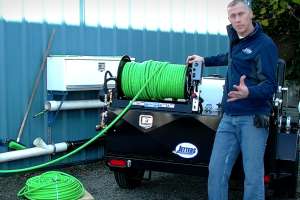
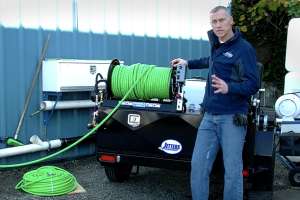
There is a market pricing saturation point you need to pay attention to. A jetter may cost $100,000, but you can’t just charge two customers $50,000 each; the payoff period must be realistic for your specific marketplace.
RETURN ON INVESTMENT
Return on investment is a widely used investment appraisal technique that measures the profitability and efficiency of an investment. It quantifies the financial return generated with the initial investment cost. By calculating ROI, plumbing business owners can evaluate the profitability of potential investments and make informed decisions.
To calculate ROI, divide the net profit generated from the investment by the initial investment cost and multiply it by 100 to express the result as a percentage.
A higher ROI indicates a more profitable investment. However, it’s crucial to consider other factors, such as business risks, market trends and long-term sustainability alongside ROI, to understand the investment potential comprehensively.
NET PRESENT VALUE
Net present value is a comprehensive investment appraisal technique that considers the time value of money. NPV assesses the potential profitability of an investment by calculating the present value of expected cash flows compared to the initial investment.
To calculate NPV, discount future cash flows back to their present value using an appropriate discount rate. Then, subtract the initial investment cost from the sum of the discounted cash flows. A positive NPV indicates that the investment is expected to generate more cash inflows than the initial investment, making it a viable and profitable opportunity.
Selecting an appropriate discount rate that reflects the risk and opportunity cost of capital is crucial. The higher the NPV, the more financially advantageous the investment is likely to be. By utilizing NPV, you can assess the potential long-term value and profitability of investment opportunities, considering the time value of money.
INTERNAL RATE OF RETURN
The internal rate of return is another important investment appraisal technique that measures the potential return rate of an investment. It represents the discount rate at which the NPV of the investment is zero. By comparing the IRR with a predetermined hurdle rate or the cost of capital, you can assess the feasibility and profitability of an investment opportunity.
To calculate IRR, determine the discount rate at which the present value of the cash inflows equals the initial investment. If the IRR is greater than the predetermined hurdle rate, it indicates that the investment is expected to generate a return higher than the cost of funding. This makes it an attractive opportunity for plumbing business owners.
SENSITIVITY ANALYSIS
Sensitivity analysis involves evaluating the impact of changing key variables on the financial outcome of an investment. By considering different scenarios and adjusting variables such as costs, revenues or market conditions, plumbing business owners can assess the robustness of their investment decisions.
Sensitivity analysis helps identify the key factors that significantly affect the financial outcome of an investment. By conducting “what-if” scenarios and analyzing the range of possible outcomes, business owners can make informed decisions based on their risk tolerance, market conditions and anticipated variability in key variables.
COST-BENEFIT ANALYSIS
Cost-benefit analysis is a powerful tool that compares the costs and benefits of an investment. It helps plumbing business owners assess whether the benefits derived from an investment outweigh the associated costs and whether the project is economically viable.
In a cost-benefit analysis, all costs and benefits including direct costs, indirect costs and intangible benefits are meticulously identified and quantified. The quantification helps plumbing business owners to compare and evaluate the financial and nonfinancial aspects of potential investments.
By considering the monetary value of benefits and costs, business owners can conduct a thorough analysis to determine whether an investment is worthwhile. If the benefits outweigh the costs, it indicates that the investment is economically feasible and beneficial for the plumbing business.
PUTTING IT TOGETHER
Effective investment appraisal techniques play a vital role in helping you make informed decisions when evaluating potential investments. By incorporating techniques such as payback period, return on investment, net present value, internal rate of return, sensitivity analysis and cost-benefit analysis, business owners can analyze the financial feasibility, profitability and risks associated with investment opportunities.
Using these investment appraisal techniques can help you optimize your return on investment, effectively allocate resources, mitigate risks and contribute to your business’s long-term growth and success.
By making well-informed investment decisions, you can strategically steer their companies toward sustainable growth and profitability instead of just buying random things that you “need.”

About the Author
Anthony Pacilla is a registered master plumber for McVehil Plumbing in Washington, Pennsylvania. He has over two decades of experience in the plumbing and HVAC trades, and has a bachelor’s in business and economics from Thiel College.
Continue reading for free