
Grout, mortar residue, and mineral deposits as well as cementitious particulates can accumulate in sewer lines over time and harden to the pipe wall or floor.
Although various methods are available to remove such blockages, some (like chain cutters) are well suited to cut through obstructions like tree roots, but are not specifically designed to dislodge hardened deposits without damaging the pipe. Instead, a more effective approach is using specialized, vibratory nozzles that are specifically designed to quickly and effectively remove hardened deposits while also not damaging the pipe.
“As a modern vibration style nozzle moves through pipe, it is designed to break up even hardened deposits into tiny pieces that flush out with the wastewater. It’s much faster than a cutter and specifically designed to minimize pipe damage,” says Dan Story, operations manager at KEG Technologies, a manufacturer of sewer products including nozzles, chain cutters, and camera nozzle systems.
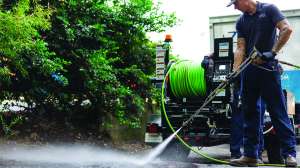
KEG’s vibrating nozzle is called the Duce Nozzle, which utilizes water-driven rotation and vibration to create a unique “jackhammer” action that removes difficult materials such as scaling, grout/mortar residue, tuberculation or other deposits within pipes. This approach is safer, faster, and more efficient than cutting and milling out the material.
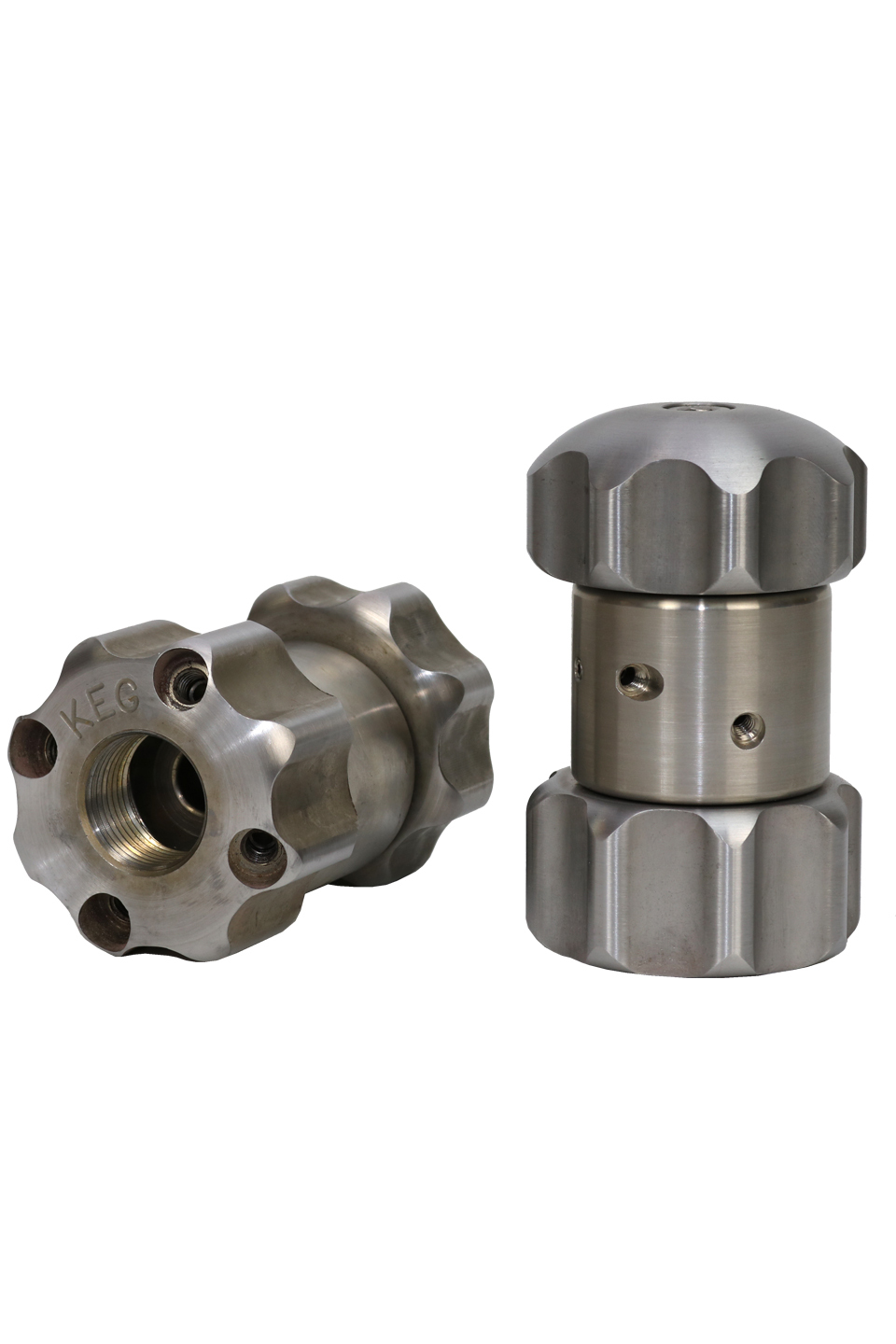
“The Duce is specifically designed to remove deposits that have hardened to the pipe wall or floor such as grout and mortar residue,” Story says.
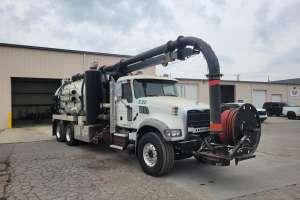
“KEG Technologies’ Duce Nozzle works extremely well to break up hardened debris,” agrees Bill Benner, senior project manager at Ventilation Power Cleaning, a Seattle-based firm that provides vacuum truck services to remove various industrial debris in the form of solids, liquids, sludges and slurries.
When water conservation is necessary, KEG also offers another version of the Duce Nozzle that is purposely designed to be used with recycled water and a recycling truck. The use of a recycling truck facilitates up to 5 more hours of jetting per day since the crew does not need to retrieve more water every 15 to 20 minutes. The approach saves water, fuel, and vehicle/machine wear, Story notes.
Although both types of vibratory nozzle can effectively clean hardened materials clinging to pipe, Story advises determining the overall condition of the pipe via camera inspection before use. He also cautions against using the vibratory nozzle in weak or damaged pipe.
“A vibratory nozzle is not recommended for use in clay pipe or in any pipe displaying cracks, fissures, or damage,” says Story, adding that KEG’s nozzle was actually named the Duce as a sort of warning: "Don’t Use in Clay Ever."
When municipalities and contractors must keep sewer lines free of obstructions, using a vibratory nozzle can help operators quickly and effectively remove hardened materials, clear clogs, and restore flow. Compared to more aggressive measures like using chain cutters, the approach can ease line maintenance and minimize incidental damage to pipe.
Continue reading for free