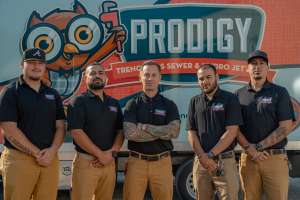

For a long time, Mark Ellefson was perfectly content in his home state of California. He established Prodigy Plumbing in 2010 in Long Beach and spent over a decade building it into not only a solid plumbing firm, but also one of his area’s best trenchless pipe rehab contractors. Life was good.
“I never thought I’d leave home. I was the king of the hill there,” says Ellefson, now operating Prodigy Sewer & Drain, based in Nashville, Tennessee.
But in late 2022, despite his successful Long Beach operation, Ellefson suddenly felt a desire to make a significant move.
“It was a faith-based experience,” Ellefson says. “I asked my wife, ‘Have you ever thought about moving?’ Everything just kept pointing to Tennessee. I kept praying on it, and it seemed this was where we had to go. Everything was well established with Prodigy Plumbing. It was a thing of if it’s going to work, it’s going to work without my being there every day, so we took the leap of faith and moved.”

Now, three years into operating Prodigy Sewer & Drain, Ellefson is in business building mode once again and finding success. But coming from a place like California where trenchless pipe rehab is commonplace and more widely understood to a Tennessee market, where it doesn’t have as strong a foothold, has been challenging, he says.
Untapped potential
Following high school, Ellefson went to trade school for plumbing. He worked for several companies until getting laid off in 2010, which is when he decided to go out on his own and launch Prodigy Plumbing.
In 2017, Ellefson branched into pipe lining after growing frustrated with subcontractors the company was using. By 2022, he was overseeing an operation of 30 employees generating about $6 million in annual revenue, and he talked about his journey up to that point in the October issue of Cleaner that year.
After making the move to Tennessee, Ellefson ran Prodigy Plumbing remotely for about 10 months. He then hired a general manager, allowing him to finally more thoroughly investigate the plumbing and drain scene of his new home.
“He was able to take everything off my hands, restructure and operate it all very efficiently,” Ellefson says. “It allowed me to explore the Tennessee area more and talk to people.”

What he found was a place with a lot of untapped potential for trenchless pipe rehab services.
“All the plumbers told me that nobody really did pipe lining,” Ellefson says. “I started digging deeper and Googling everyone who advertised ‘trenchless’ or ‘pipe lining.’ I cold-called them, and once I got past their dispatch and spoke with someone on the leadership level, they’d say, ‘Actually, we don’t do that.’”
Ellefson asked why they were advertising those services then. Common responses were that they once did trenchless rehab but decided to stop. Or that their department for it fell apart.
“It’s a very specific thing. If you don’t have a tight leadership team that is dedicated to the trenchless world, it can fall apart if you have any turnover. It gets shelved,” Ellefson says. “And by the time anyone thinks about trying to rebuild it, it can take a year or two before the department is operating again.”
Ellefson decided he’d be the pipe lining pioneer for the Tennessee area and Prodigy Sewer & Drain was born.
Mature market to an emerging one
Ellefson says he quickly had to adjust expectations.
“Part of it was ego,” he says. “I established something successful out in California, and I thought I was a big fish there. I said it’s going to be super easy to bring along the same marketing people and do the same things that worked in California to a town that’s booming. I thought it was going to be really easy to get the phones to ring and scale really quickly and all that.”
But in Prodigy Sewer & Drain’s first nine months, that wasn’t the case. Ellefson was spending money on various marketing expenses related to SEO and Google and gaining little traction. What he learned in talking to locals was that “pipe lining” was simply not the type of service people searched for online. Even for something more general like “plumbing” people were more likely to get a recommendation from friends or neighbors than resort to Google.
“It’s a good ol’ boy system,” Ellefson says. “I didn’t know those still existed. It’s a whole different world. As big as Nashville is, it still has a very small town vibe. So I started doing more direct marketing, more outreach to people.”

Whereas in California, Ellefson simply had to maintain visibility and often people came to him, in Tennessee, he has had to be more proactive about finding new potential lining customers.
“Even the governor is part of the family that owns the biggest home services company in the state — massive commercial accounts, chains; that business doesn’t go anywhere else,” Ellefson says. “That’s the kind of competition here. Big, well-established entities and then smaller ones popping up. It’s taken time, but business is starting to trickle in. More people are finding us.”
On top of that is the education component.
“Pioneering pipe lining in Tennessee is a real thing,” Ellefson says. “It doesn’t exist here in the way it does in California. It’s not like I can turn the market on real quick and start selling because I’m getting all these opportunities. We’re being educators first in order to get different levels of customers. Once they get the gist of it, then they’ll absolutely refer you to others. It takes a while to get the ball rolling, but it’s starting.”
Ellefson says he’s done things like Instagram videos breaking down the difference between unclogging a drain versus the permanent solution of relining. Or even better, FaceTime with drain cleaning customers.
“I never speak about lining until I get the line cleaned first,” Ellefson says. “But after it’s cleared and I’ve run a camera, if I find any breaks — if it’s old cast iron heavily scaled or roots growing or misalignments — I ask the customer what the plan is. Are they staying long term? Passing it to relatives eventually, keeping it in the family? I tell them that if they don’t want to deal with it again, I can offer a permanent solution. The way I talk to them is to make them understand they’ll have peace of mind.”
One particular community with townhomes where Prodigy Sewer & Drain has done a few jobs is a good example of the gradual snowball effect taking place in the area for pipe lining awareness.

“They’re all slab foundations. Basically we can open up one access point and do four different lateral shots and be done in two or three days,” Ellefson says. “Everyone there when they see us, they want a card. So for that neighborhood, we’ve done specific door hangers with before/after comparisons showing an old pipe and a lined pipe.
“We want to be the big provider, operating at the highest expert level, coming in and saving the day. Like we’re the superheroes for this whole area, and it just takes time.”
Ellefson is also benefiting from being a trenchless contractor who advertises such work and actually does it. Customers are coming to him after having the same experience he did early on while cold- calling area contractors who listed lining services on their website despite not doing the work.
“I’ve gotten calls from people who have moved here from other states — Florida, Texas, California, New York — and they’re familiar with lining. They’ll ask if we do it. I say yes and it’s ‘Are you sure? I called a bunch of companies all advertising that they did and when I got through they said they didn’t. I don’t want to waste my time.’ That’s another interesting part of how people are finding us.
“And some of these big companies will say that they do just to get a technician out. Once the technician is there it’s, ‘Oh, we need to dig this up,’ and they say lining is not an option when it truly is. But really they don’t have the equipment, experience or team to do the work. I’ve walked into homes where people say, ‘I wish I’d found you earlier. We just had someone out who trenched end to end to replace a line and you could’ve saved us.’”
Building the business

Ellefson is operating with six employees at the moment. A single lining crew takes on two or three jobs a week, depending on the size. The company is in the process of building a second lining crew. About 60% of the Prodigy’s total workload is either lining or epoxy coating. Sewer maintenance work — camera inspections, jetting, drain cleaning — covers the remainder.
“When we get those opportunities to service old drains, our conversion is extremely high for some sort of rehab or lining project,” Ellefson says.
Most of Prodigy’s work is on the residential side, about 65%. The company hasn’t yet taken on a municipal contract but does get leads and is starting to put out bids to try to break into that sector. About 20% of the lining workload is referrals from plumbing contractors not offering lining.
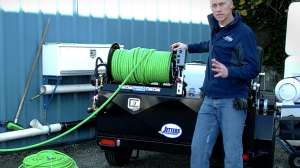
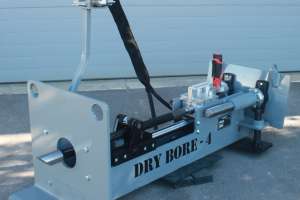
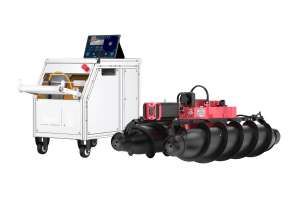
Prodigy’s trenchless equipment lineup includes MaxLiner products, a UV lining system, a steam-curing unit from Repiper for small-diameter pipe, a MidiCoater from Trenchless Supply for epoxy coating, and Picote descaling tools. Other equipment includes BRUTE jetters from JETTERS NORTHWEST (two different models — the 9 gpm at 4,000 psi and the 12 gpm at 3,000 psi), smaller drain cleaning tools from Gorlitz Sewer & Drain and Milwaukee Tool, and inspection cameras from RIDGID and EPL Solutions.
“I want to stay around the $5 million to $7 million income range with a staff of about 20 people,” Ellefson says. “I truly think we’ll be able to cover the entire state, Knoxville to Memphis. It’s just kind of how it works here. When they need you and you’re the only company that can get there on time or deliver installation, you have to take the work.”
Even though Ellefson has growth plans, he doesn’t want the company to get too big.
“I want to maintain quality and the experience of customers and team members. If you can harness all those things and make it the priority of the business, the business will take care of itself.

“I think lining is probably the highest return on investment in the plumbing trade if you’re good. Just based on the experience with my California business, the plumbing side makes a certain amount of return but the drain and lining world, that’s the most profitable piece of the business. I don’t want to be the big fish with 100 employees. I want 10 to 20 people where we can make a huge bottom line and still have time to be with our families. It’s not about growing for size and trying to manage it. It’s how efficient can we be so we can do a $10,000 job in a day with one team, and it’s really profitable, and we’re still home at 5 o’clock.”
Tips for breaking into lining
Stay hungry and stay humble. Ellefson says that’s his ultimate takeaway from his move from California to Tennessee.
“I had my ego because I already had a level of success in my life and business in California, and when I moved here, it humbled me. It was a whole different market I had to research and understand. If you’re not willing to go back and get dirty again, your own ego is what’s going to stop you from growing.”
As for establishing a demand for trenchless pipe rehab services in an underserved market, Ellefson recommends companies first take advantage of already existing customer databases.
“I think for the companies that have been established for years and, say, are heavy in plumbing but want to get into the drain rehab world, do an email blast campaign to all existing customers. Say you’re offering drain cleaning services and using innovative equipment to rehab old systems, and they can reach out for a free consultation or free inspection. That will move mountains for anyone who has an existing database.”
Ellefson emphasizes that early on there should be a strong commitment to making trenchless services a core focus from company leadership, otherwise it can be difficult to make much headway.
“It has to be something so strong in your belief system that you want to be great at it because lining equipment is expensive. That’s why a lot of people don’t touch it. A leader at a high level — an owner or general manager — should be involved in operating equipment and installing or the whole department will sit when there’s turnover. Make it a primary focus and market yourself around drain and sewer services. The more you can market around those key terms, the better position you’ll be in to capture the opportunity from the customers looking for those services.”
Someone to trust
Ellefson says he’s still found that certain business values maintain constant, no matter what market you’re working in.
“Customers want someone they can trust who will show up and deliver what they promise. If you can do all those things, you’re home free. It’s not cookie-cutter. You still have to modify because every market is different. But at the end of the day, if you show up on time when you say you will and go out of the way to deliver the service and make the customer happy, that’s what everyone really wants. If you make that a priority, I think you’ll do well in any market. That’s how I did it back in California when I was starting. All I knew was if you took care of one customer they’re going to refer you to someone else. Do that over and over and over.
“I’m focused on doing that again in Tennessee. I just have to be patient and do whatever it takes to keep us moving. Pioneering a very niche specialty is hard, but I like a challenge.”
Continue reading for free