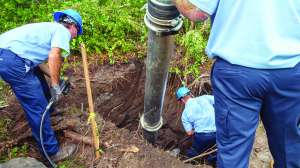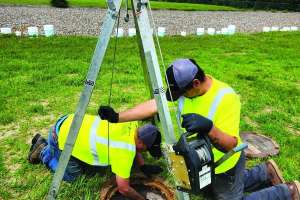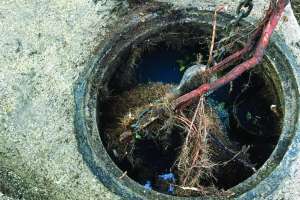

A septic tank, both new and existing, is considered a confined space. I cannot tell you the number of times someone has told me they went into a tank — or even sent me a picture of someone inside a tank — without the correct safety measures.
Entering tanks is no small ordeal, and it’s crucial that all OSHA requirements are met before entering a tank for any period of time, and for any reason. It’s always preferred that the needed management activities are conducted without ever needing to enter a tank, but there are times needed repairs or maintenance cannot be done from the surface.
Of the enclosed spaces associated with onsite sewage treatment systems, septic tanks are the most likely to be hazardous, but any enclosed space should be considered dangerous.
Air it out
The gas space must be adequately ventilated using blowers and a large-diameter, flexible hose. Always be sure to test the gas space frequently for:
- Sufficient oxygen — Use an oxygen deficiency meter. Sufficient oxygen generally ensures that carbon dioxide will also be in a safe range.
- Hydrogen sulfide — Use lead acetate paper or a hydrogen sulfide detector
- Explosive conditions — Use a combustible gas indicator
Going in
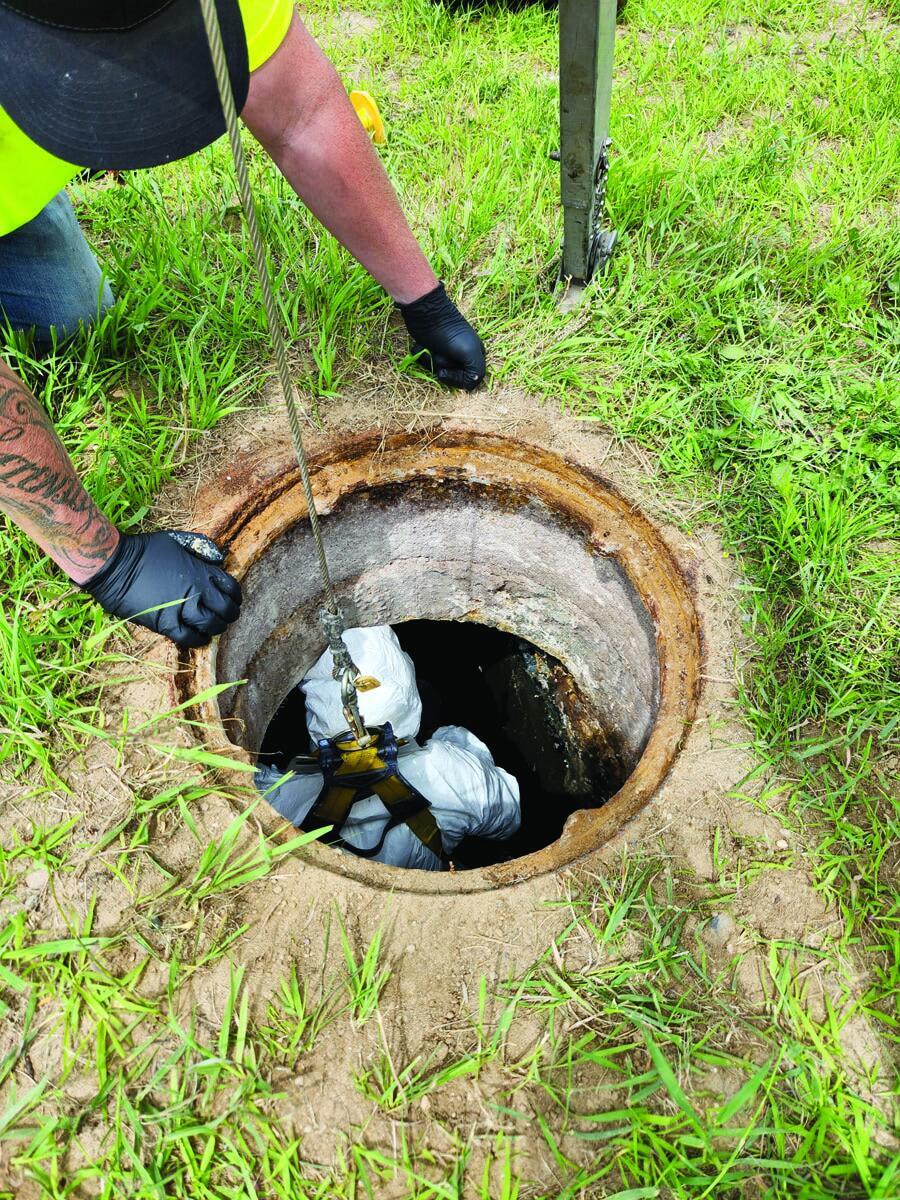
A person entering the confined space must be secured with a lifeline, preferably attached to a safety harness. Appropriate lifelines are 3/4-inch manila, 1/2-inch nylon or 1/2-inch polypropylene. The free end of the line should be tied to an appropriate object so that it does not fall into the tank. Two physically able people must remain on the surface when someone enters a tank.
Rescue of a person who has collapsed in a confined space without a lifeline should be undertaken only by someone wearing a self-contained breathing apparatus and a lifeline, or after adequate ventilation and testing as previously described. The entry of a second person without adequate protection will only result in two casualties.
Know the gases
Suffocation due to oxygen deficiency is one hazard of enclosed spaces. Chemical and biological activities present in onsite sewage systems consume oxygen. Also, the proportion of atmospheric oxygen to other gases can be decreased because of the production of gases such as carbon dioxide and methane. These can seep through joints, cracks and even soil into confined spaces.
Normal atmospheric air contains 21% oxygen. At 14% to 16%, the minimum safe exposure is eight hours. For a brief time, humans can tolerate levels as low as 12%, but levels below 10% are potentially fatal. At 7% or below, conditions are considered fatal.
Toxic gases, which are common in onsite wastewater systems, are another hazard. The following are some of the attributes of toxic gases that may be present in an onsite system:
Hydrogen sulfide (H2S)
- Forms during anaerobic decomposition in the septic tank
- Smells like rotten eggs in small concentrations and sense of smell is rapidly impaired as concentrations increase. Loss of smell occurs in two to 15 minutes at 0.01%, faster at higher levels.
- Causes death in a few minutes at 0.2%; acute poisoning is rapid at 0.07 to 0.1%
- Has a maximum safe 60-minute exposure level of 0.02%
- Has a maximum safe eight-hour exposure level of 0.001%
Carbon dioxide (CO2)
- Forms during aerobic or anaerobic decomposition
- Appears colorless, odorless and may have acid taste at high concentrations
- Is heavier than air, and therefore found near the bottom
- Cannot be endured at 10% or higher for more than a few minutes, even if sufficient oxygen is present
- Has a maximum safe 60-minute exposure level of 4%
- Has a maximum safe eight-hour exposure level of 0.5%
Gasoline fumes
- Result from spills or improper disposal
- Are rapidly fatal at 2.4%
- Have a maximum safe six-minute exposure level of 0.4%
Ignition risks
Explosions are another hazard. Remember, no flames, sparks or electrical tools are allowable until the atmosphere of a confined space is proven nonexplosive. Do not smoke. The most common explosive agent found in onsite systems is methane. Methane is colorless and odorless. The explosive limits are atmospheric concentrations of 5 to 15%. The septic tank headspace may contain as much as 60% methane.
Even though there may be little or no oxygen to support combustion, an explosion may nonetheless occur. As a tank is pumped, the inrushing air can create an explosive condition where none had previously existed. Be aware that methane, which is less dense than air, may seep into areas containing electrical equipment. Another explosive agent you may encounter is gasoline. The explosive limits for gasoline fumes are atmospheric concentrations of 1.3 to 6%. These fumes are denser than air, so they are more likely to be near the bottom of the gas space.
Health concerns
Wastewater should always be considered infectious and dangerous. There can be disease-causing organisms or other pollutants such as chemotherapy drugs, which at low levels can impact human health.
Wear the appropriate PPE, including gloves, eye protection and a mask. All workers should keep their hands and fingers from their noses, mouths and eyes while working with wastewater. A good rule is to keep your hands below your collar while you work.
Before eating or drinking, be sure to wash up thoroughly, and, preferably, change your clothes. You should provide yourself with a way to change out of your work clothes and wash up before entering a food store, restaurant or even your car or home. Check with your doctor about vaccinations against typhoid, paratyphoid, tetanus, hepatitis A and B, and polio.
Structural integrity
Tanks can also create collapse safety issues. Older tanks that have lost their structural integrity or were not designed for the load could collapse if a pump truck or other vehicle is parked over or near it.
Metal parts may also fail due to corrosion. When exposed to high humidity and particularly to condensed moisture, it will corrode rapidly, thus losing its structural integrity. Anaerobic decomposition produces gases, which can dramatically increase corrosion rates. For these reasons, always test structural components such as ladders, brackets or railings before relying on them for support. To avoid the hazards of collapsing materials, structural components that are installed in confined or enclosed spaces should be of corrosion-resistant materials.
The work you do is important in protecting public health and the environment, but care must also be taken to keep yourself safe while doing the work.
Continue reading for free