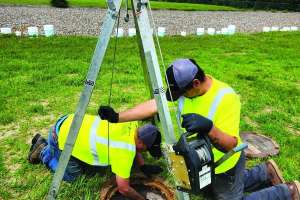
Since starting NCM Hydrovac in 2012, owner Kris Norris has continually looked for ways to stay on the forefront of the industry’s evolution. (Photography by Ashley Fraser)


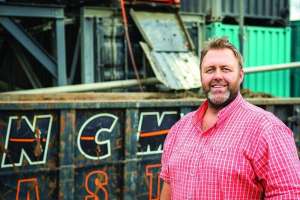
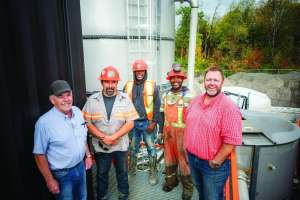
Since starting NCM Hydrovac in 2012, owner Kris Norris has continually looked for ways to stay on the forefront of the industry’s evolution. (Photography by Ashley Fraser)
At its beginning in 2012, NCM Hydrovac Services had only a few employees and a 2006 Vactor combination unit.
Thirteen years building a business can go fast. A modest organization with a family feel, those values have been carried forward, but the company has also stayed on a constant growth trajectory, now 40 employees strong with a truck fleet of 16.
NCM Hydrovac has expanded its visibility in the Canadian capital Ottawa, Ontario, and surrounding areas as a reliable provider of hydroexcavation and sewer cleaning services. Since last being featured in Cleaner magazine in 2018, the company has additionally gained serious traction in the material receiving and environmental services space.
Owner Kris Norris says the basic goal for the company right now is continuing to scale and develop deeper connections within the community. Among the latest new developments for NCM Hydrovac is the debut this year of a soil transfer facility that accepts vac truck loads, recycling soils for incorporating back into the environment. For Ottawa, Norris says that it’s a first-of-its-kind system.
“You either have to handle it yourself, bring it to a third-party handler or in some cases, there isn’t even a handler available,” Norris says. “That’s when you’re left trying to lead, to set a benchmark in your community and industry for how vac trucks should be managing their liquid soils.”
Some consistent focus areas for NCM Hydrovac in recent years have been facility expansion and staying up to date with new equipment and parts inventories.
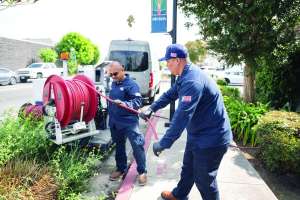
In 2024, NCM Hydrovac acquired two new Model 900 ECO combo sewer trucks (Sewer Equipment) to help meet demand in its service area for catch basin and sewer cleaning jobs.
“That has grown quite a bit,” Norris says.
The company recently added a new Tornado vac truck, as well, and is considering at least two more hydrovac purchases to stay current as older units age.
Norris has committed to a meticulous vertically integrated approach to sewer and vac truck equipment, the company’s service offerings, and environmental and regulatory needs in the industry. One of the company’s needs was a dedicated space to handle the influx of sewer waste generated through the robust daily operation of its own fleet. NCM Hydrovac’s sewer waste processing plant, using a conventional gravity separation method, is now located inside a newly constructed and fully enclosed 11,000-square-foot steel building.
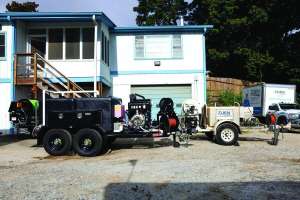
In addition to processing, the structure houses mechanical installations and provides interior office space, changing rooms and showers for employees. A storefront component to the building aligns with NCM Hydrovac’s brand and customer-facing business needs while a shop area is being leveraged for servicing trucks and equipment.
“I wanted to have more of a presence in the community and a quality storefront to represent the business. Not just have some trucks parked outside,” Norris says.
Equipment reliability and maintenance are high priorities for Norris. The company’s fleet currently totals 16 — eight combo sewer cleaning units and eight hydrovacs, including Super Products Mud Dog 1600 units and Vactor 2100 combination units.
“There is no mechanical digging around any buried infrastructure or utilities in Canada,” Norris says. “We’re dealing with a lot of water main breaks. We get a lot of fluctuation in the ground with the change of seasons, between frost and thaw. It causes things to fail and break, so we’re very responsive with that — 24-hour emergency service.”
Regular equipment maintenance and periodic upgrades mean fewer interruptions for NCM Hydrovac, avoiding missed opportunities while executing on its operational strategy.
“We want to be a one-stop shop — clients can rely on us to roll to where they go,” Norris says. “We will go where the tires will turn, within three hours from our base to serve certain customers that are bidding on remote jobs.”
Strategic stockpiling has become an important key, enabling improved operational readiness without delays and translating into reduced downtime if a replacement part is needed and supply chain shortages become an issue. For example, NCM Hydrovac relies on hydroexcavation and jetting accessories from manufacturers like Suttner America, USB-USA, KEG Technologies and Hydra-Flex. Norris makes sure that plenty of whatever crews need is on hand, especially specialty nozzles.
“Instead of keeping just a few items on the shelf, now when we buy, say, spinner tips, we purchase 30 or 40 at a time,” Norris says. “If one breaks or needs repair, we do not always have to rely on expedited or overnight shipping schedules.”
Increasingly tight regulations associated with soils classification and ordinances related to vac truck spoils in places like Ottawa and across Canada are requiring more material handling to be managed at licensed processing facilities.
NCM Hydrovac has decided to be a leader in that space in its region, serving a growing client base as well as meeting its own needs. Debuting earlier this year, the company’s new vac slurry processing equipment from Italian manufacturer Matec Industries is a centerpiece of its facilities and new soil transfer station. The system was delivered in January 2025, and the first vac truck loads were being washed by the end of April. Once Norris was certain the system was operating as intended, he opened it up to other operators in the area.
For Ottawa, Norris says that it’s a first-of-its-kind system. His vision for commissioning the new plant and search for the type of technology he wanted was a goal that had stretched out over more than five years.
“It was a lot of trial and error,” Norris says. “We’d buy equipment, it wouldn’t work the way we wanted. So we’d sell it and try something else.”
Ontario’s Ministry of the Environment, Conservation and Parks has granted NCM Hydrovac amendment approval as a licensed Class 1 soil management processing site, authorizing the company to process hydrovac slurry waste and dry soils including nonhazardous contaminated soils.
At the heart of the new soil transfer station is a 90,000-liter cone silo.
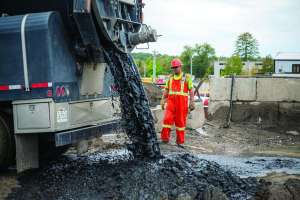
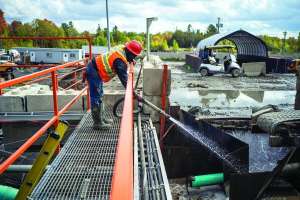
First, up to four trucks at a time can back up to a recessed concrete pad. Incoming vac truck loads are processed live. Material starts undergoing treatment as soon as it’s dumped, and solids begin settling out. Slurry enters the multistage plant and goes through a series of phased processes.
It’s built like a stackable “Lego set,” Norris says, using interconnected containers and stainless steel components instead of fixed concrete tanks. This engineering makes it so the system can be expanded when NCM Hydrovac is ready to increase volume capacity.
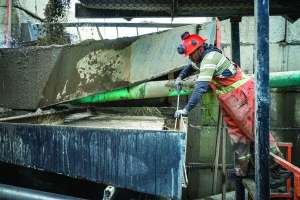
The slurry reaches a 40-foot holding tank where it’s continually agitated, emulsified and stirred up. Debris is screened and separated out before it enters the next phases. A polymer treatment then bonds particles into solids and separates water. Just prior to that, an automated sampling process occurs, with operator visibility through a clear tube and controls that adjust dosing in real time.
The last step is a custom-modified 120-plate filter press, capturing and processing residual sludge into slabs after clean water has already been pulled out.
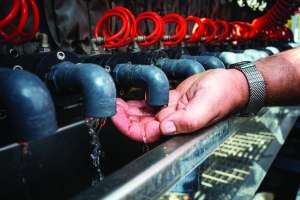
“We separate everything, the clay, silt and the sand, the stone and all the organics, any grass, leaves, seeds, nuts, everything,” Norris says. “Clean water overflows from the top into a clean water tank. We use that clean water to run through our wash plant. From there we refill our trucks and go back to work.”
Perfectly good sand and dirt should never be treated as a discarded product, Norris says. Recovered materials aren’t just clean, they’re reusable. At the end of the day, it all boils down to a customer needing a solution.
For NCM Hydrovac’s part, the “circular handling” echoes a culture that year after year is becoming more embedded in recycling and reuse, creating a more sustainable, closed-loop operation. Sand and aggregates are screened out and can be sold or returned to job sites for backfilling. Even the sludge can be repurposed as clean fill or erosion control material, depending on content.
In terms of water quality, Norris says what he sees, based on the results of independent lab tests NCM Hydrovac has administered, is below 1 micron of suspended solids. That’s cleaner than municipal tap water or rivals even bottled products in some cases, Norris says.
“Hydroexcavation is supposed to be a safe solution to digging, but the byproduct that comes from it becomes incredibly difficult to manage,” Norris says. “We put [hydro sand] around utilities to protect them, and when you find sand it’s a telltale sign. All that sand was bought at some point, and now when we have to expose it, it goes to our plant. You can use it again. We capture it all and reintroduce it back to the job site. The recycled water goes right back into the vac trucks so you’re not depleting any resources that are being supplied to homes or for consumption.”
Norris says he would like to see more people getting excited about joining the industry, and part of his mission through NCM Hydrovac is to find ways to promote growth in the industry and help uncover solutions to challenges. Thus, the soil transfer facility — a valuable tool not only for his own company but others as well.
“It was finally like a hard stop in 2025 when the ministry said all liquid soils have to go to a licensed dump facility,” Norris says. “That’s when we became more open to the public to try it. We still have an open-door policy. Guys can come and register an account and dispose of their material properly. We’re getting people who just recently acquired hydrovac trucks rolling in here and offloading one or two times a day.
“We try to get ahead and hopefully plow a road and be a leader in the industry. It gets us that specialty work. We’re just trying to really support the sewer cleaning and vac truck industry in our area — promote it as a career and help it grow.”
Continue reading for free