


In 1996, Southeast Connections — then called Southeast Communications — employed one work crew. It owned only a mini-excavator, a trencher and a bucket truck. And it focused solely on installing fiber optic lines for telecommunications companies, primarily around Atlanta.
In the ensuing 28 years, things have changed dramatically. Today, the company employs about 1,600 people. It serves a variety of utility customers, primarily doing horizontal directional drilling for natural gas pipeline installations. Based in Conyers, Georgia, the company also has satellite facilities in nine states.
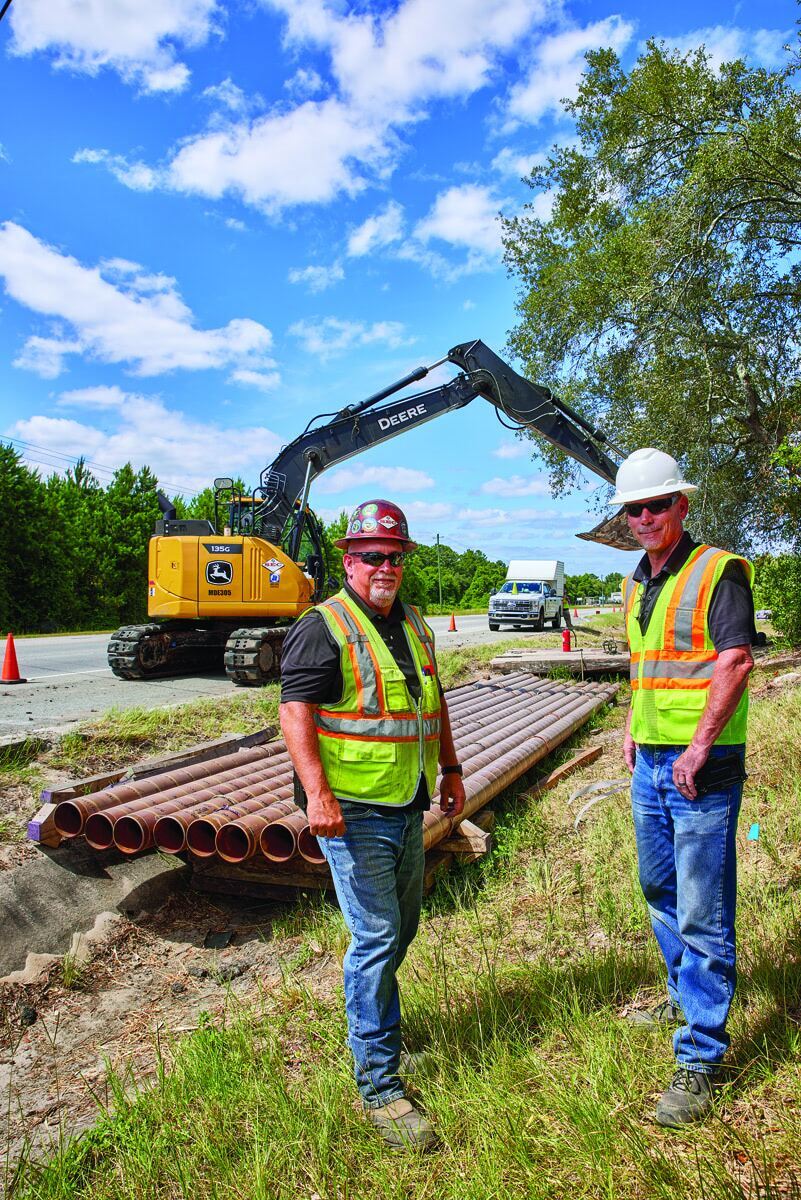
Furthermore, it has served customers in at least two dozen states in the southeastern United States. It owns nearly $50 million worth of equipment, including HDD machines, hydroexcavation trucks, inspection camera trucks, excavators and a variety of other “yellow iron” equipment.
The key ingredients in this growth spurt? An emphasis on service diversification and the ability to pivot to new markets. Consistent investments in reliable equipment that improved productivity and helped build solid customer relationships. And a sharp focus on employee development and retention, explains Doug Simmons, general manager of the HDD division at Southeast.
“The primary driver of our success is our people,” says Simmons, who joined the company in 2003. “At the end of the day, the guys out in the field with boots on the ground are the ones in front of customers, so the best drivers for growth and success is having the right people in the right places. And when you get them in your network, you have to take care of them in order to keep them. They’re going to be the backbone of the business and the ones that grow the business.”
To that end, the company intentionally lays out career paths for field employees.
“These days, younger employees want to see a pathway or a ladder for career growth,” Simmons says. “You have to understand what they’re looking for. We might initially invest $6,000 to $7,000 to train someone, so it’s important to show them the way up the company ladder or you risk having them leave. If you don’t respond to their needs and support them, they’ll go somewhere else. We’re very attentive to providing what they need.”
Simmons says the company also provides employee support via investments in reliable and productive equipment.
“We hire more than a dozen people a month, and one common theme I hear from them is they didn’t have much support at their previous job and didn’t get what they needed out in the field,” he says. “We don’t let things like that fall on deaf ears — we give them what they need, whether it’s technical support or equipment.”
Training is also critical. Because there’s no formal training for things such as operating an HDD machine, employees mostly receive on-the-job training, particularly from seasoned industry veterans. The company created an in-house, one-week-long HDD training curriculum called SEC HDD Academy, Simmons says.
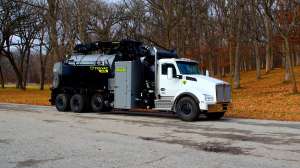
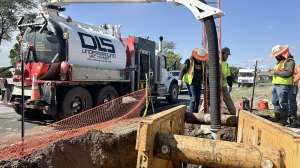
For equipment, the company relies on about eight hydroexcavation trucks, mostly Mud Dog models on Peterbilt chassis from Super Products and HV56 units from GapVax, primarily built on Peterbilt chassis. Most of the trucks are equipped with 12-cubic-yard debris tanks, 1,200- to 1,500-gallon water tanks and Roots blowers and Ingersoll Rand blowers.
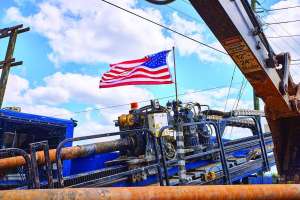
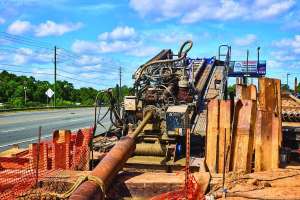
The company’s fleet of more than 80 HDD machines is primarily Vermeer units. The rest of the fleet is rounded off by machines from Ditch Witch (a brand owned by The Toro Company) and American Augers.
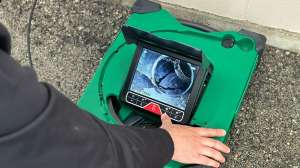
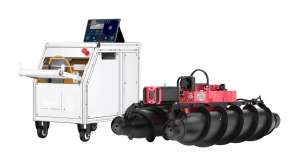
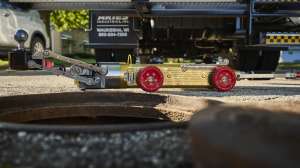
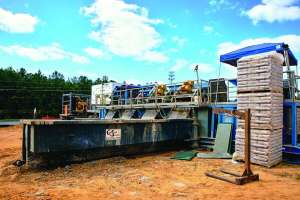
In addition, the company has invested in more than 500 excavators, bulldozers, skid-steers, wheel loaders and backhoes, made mostly by Caterpillar and John Deere; seven drilling-fluid recycling units from Tulsa Rig Iron and Elgin Separation Solutions; and about 20 camera trucks equipped with IBAK pipeline-inspection systems.
The camera trucks reflect the company’s philosophy of providing diversified, turnkey services, as well as leveraging technology to open new markets. Around 2010, Southeast proposed a new service to a natural gas utility company: use pipeline-inspection cameras to find sewer laterals and avoid cross bores during HDD projects.
“We were the first in our market to offer this service for gas-utility owners,” Simmons notes. “By the end of 2015, we had about six camera trucks. And now we have more than 20 trucks working all over the southeast. In fact, pipeline inspection has grown so large that it operates as a separate division within the company.”
Pivoting to adapt to changing market conditions or further diversify its services is nothing new to the company. It started out installing fiber optic lines for telecommunications companies, then slowly evolved into a leading natural gas contractor and HDD provider that installed transmission and distribution pipelines for natural gas utilities, Simmons says.
In fact, in an ironic twist, Simmons used to work for a company that sells HDD machines. He sold Southeast Connections its first unit in 2001 and helped train employees to use it, he says.
By the time Simmons joined the company in 2003, the company had about 35 employees and primarily served the metro Atlanta market, he says.
“At the time, the company had a lot of work out in front of it,” Simmons notes. “They just had to buy the equipment to do it.”
An agile business mindset also spurred growth. After the “dot.com” economic bubble burst in the early 2000s, which hurt the telecommunications industry and dampened demand for more fiber optic line installations, company officials decided to pivot and do longer and larger HDD projects.
The catalyst? Used HDD equipment was available for roughly 25 cents on the dollar because of low demand for fiber optic work, Simmons says. This created a turn-lemons-into-lemonade moment for the company.
“That’s when I came on board,” he recalls. “There was a great opportunity if you were willing to stick out the down side of the market and get to the other side of it. We made the best of the situation and started to diversify the business. We even changed the name of the company from Southeast Communications to Southeast Connections to better signify that we were in the utility industry, not just telecommunications.”
At first, the company primarily installed distribution pipelines as a subcontractor for a contractor that worked directly for a large natural gas utility. Distribution lines typically are smaller-diameter, low-pressure pipes made from medium-density polyethylene; the pipes deliver natural gas directly to customers.
“That’s how we learned the gas side of the drilling business,” Simmons says. “And around 2004, we received our first direct contract from the utility company.”
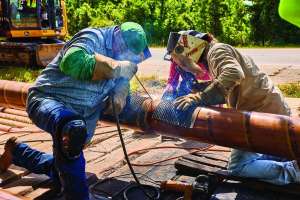
Around 2009, the company further diversified by creating a transmission pipeline division, a natural outgrowth of its distribution-pipeline work. Transmission pipelines are made of steel, are much larger in diameter and operate under higher pressure than distribution lines. Transmission lines move natural gas downstream to different markets, where distribution lines then carry the gas the rest of the way, he explains.
Today, about 90% of the company’s work is related to natural gas pipelines and the company works for almost every major natural gas supplier in the southeastern part of the country. About 55% of the work is on the distribution side and 45% on the transmission side, Simmons says.
Success didn’t happen overnight; entering new markets often involved learning to crawl before walking, Simmons says.
But slow and steady growth continued, largely through smaller, one- to two-mile-long installation projects that enabled the company to continually build up its resume and expertise.
Looking ahead, Simmons is optimistic about continued growth at Southeast.
“Our outlook is growth, growth, growth, primarily through geographic expansion,” he says. “We’re going to slowly migrate across the country.”
Oklahoma and Texas represent two key growth markets, Simmons says.
“As the world continues to invest in more sustainable energy, it’s important to acknowledge the crucial role that natural gas plays in meeting our energy needs,” Simmons says. “Investments in natural gas pipeline construction will continue to be necessary for the foreseeable future. The future of natural gas pipeline construction is bright as long as we work together to balance our energy needs with our commitment to sustainability.”
Continue reading for free