
In every industry, pioneers lead the way.
When it comes to UV-cured pipe lining, Excavation Lafontaine is one such trailblazer. Based in Lévis, Québec — across the St. Lawrence River from Québec City — Excavation Lafontaine has been doing UV-cured pipe lining in its projects since 2015.
“Frankie Lafontaine, the first president of the company, has always had a particular interest in new technologies,” says Mathieu Asselin, Excavation Lafontaine’s director of estimation and project management. “UV-cured lining rehabilitation was a technology he followed closely.”
Constantly evolving
Excavation Lafontaine was founded in 1975 when Frank Lafontaine, an experienced machine operator, started the business with his three sons in Saint-Malachie, Québec. They focused on renting heavy machinery by the hour, mainly to farmers.
Seven years later, Frank’s eldest son, Frankie, took over the family firm and repositioned it as a general contracting firm. It opened an estimate/management office in Lévis in 2003 and then consolidated its operations there in 2009.
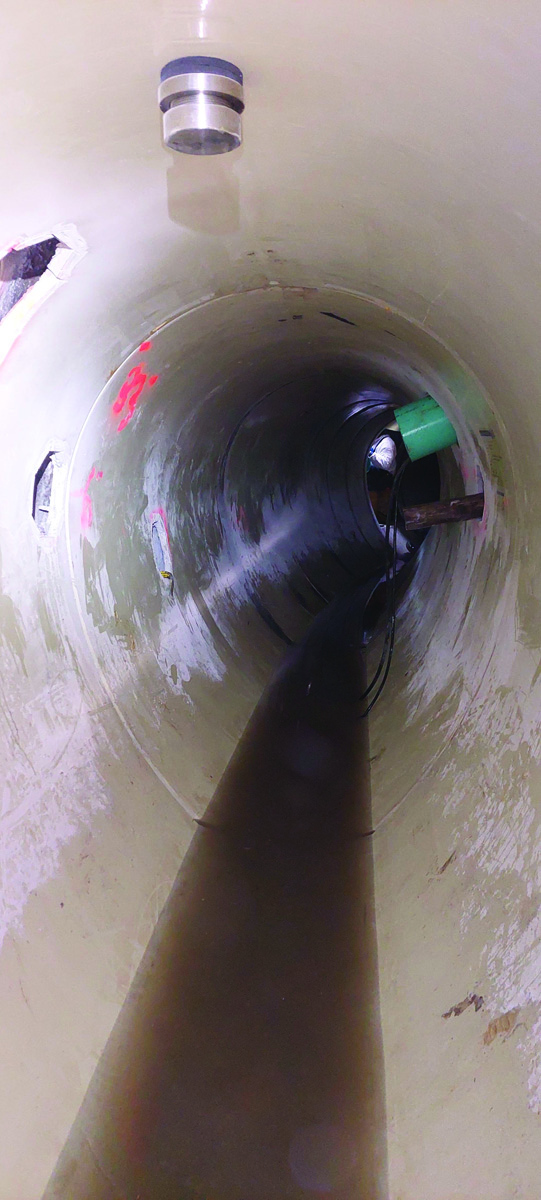
In 2015, Excavation Lafontaine expanded into new areas such as sewer rehab using UV-cured liners, among others. Its sales now stand at more than $180 million annually while the number of employees reaches 350 at peak times. The company also operates more than 35 quarries and sand pits.
Excavation Lafontaine carries out large-scale projects throughout Québec, notably in Bécancour as part of battery industry projects as well as in Montréal for civil engineering and pipeline rehabilitation work. In 2023, the company ranked 19th in the list of the Top 100 Construction Leaders in Québec. It is currently led by Mathieu Lafontaine (president) and François Lafontaine (vice president), Frankie’s sons.
“Excavation Lafontaine has an extensive fleet for both civil engineering and trenchless works,” Asselin says. “This fleet includes more than 200 pieces of heavy equipment — excavators, loaders and tractors, among others — three lining units [UV and steam] and two reaming units.”
Keeping this fleet in top condition is a priority and a source of pride for the company. To this end, approximately 50 employees are dedicated exclusively to equipment maintenance including mechanics, welders, painters and other specialists.
Seeing the light
At the end of 2012, Excavation Lafontaine secured its first contract involving the rehabilitation of a storm sewer section using an inserted liner.
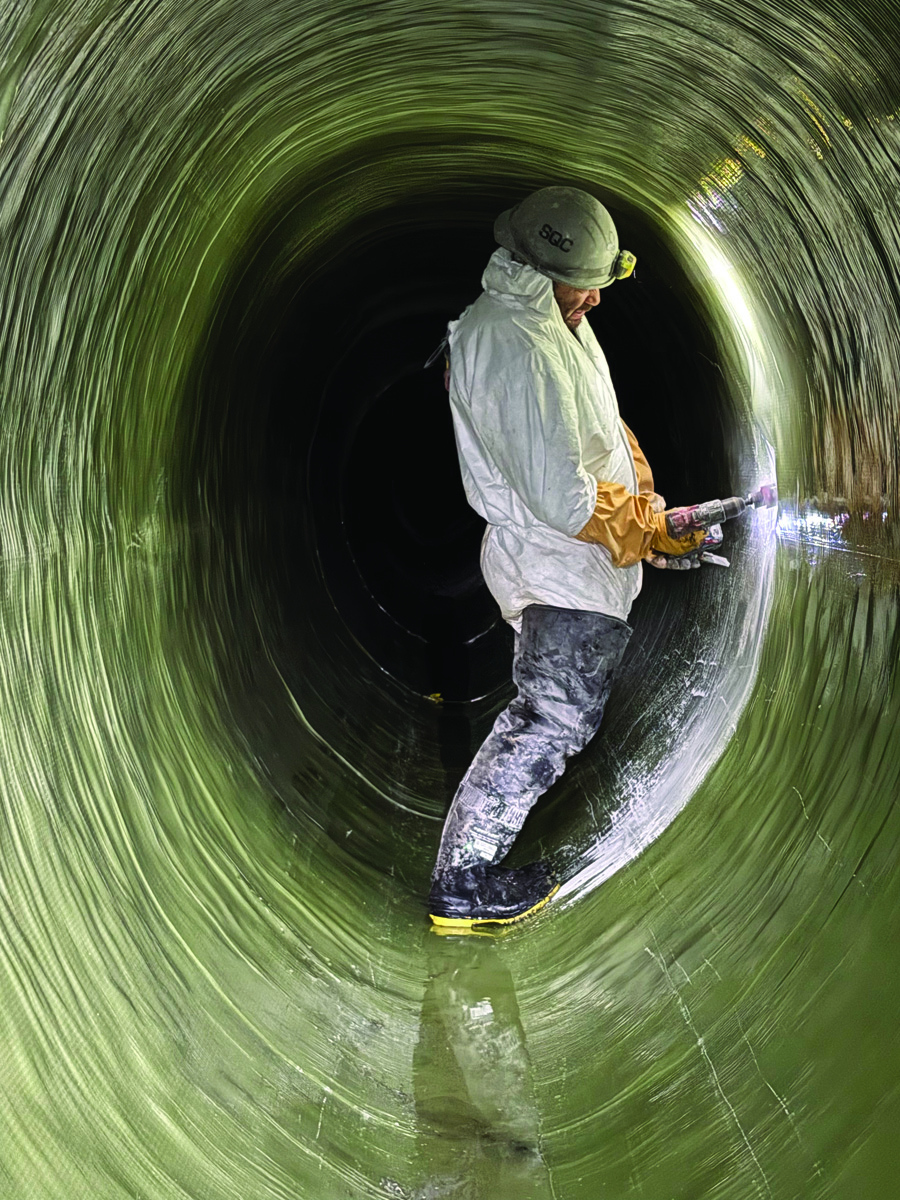
“The completion of this project in the summer of 2013 allowed the company to establish key contacts with specialists who had expertise in UV-cured lining,” Asselin says. “From that point forward, trenchless work transitioned from a field of interest to a concrete operational practice within the company. However, it was in 2015 that the integration of this technology fully materialized, with the completion of Excavation Lafontaine’s first UV-cured lining project for the city of Québec. This contract marked the starting point of the company’s expertise development in this innovative pipeline rehabilitation field.”
Initially, Excavation Lafontaine used rented equipment from various suppliers to install UV-cured liners. Then, after two years of contracts and the proven success of its UV-cured lining rehabilitation work, the company decided to purchase its first UV unit as well as its first reaming robot system.
“Since then, the equipment fleet has expanded significantly with the addition of a second UV unit, additional reaming robots and numerous specialized vehicles, thereby strengthening the company’s operational capacity and autonomy in carrying out trenchless rehabilitation projects,” Asselin says.
More mobility
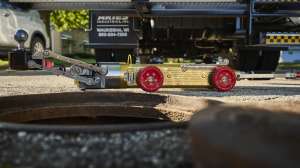
By 2017, Excavation Lafontaine had fully embraced UV curing for its sewer relining projects. However, its original equipment had problems working in confined spaces. That’s why the company decided to buy its first mobile UV curing unit the same year.
“This choice was motivated by two main criteria,” Asselin says. “The unit’s versatility in terms of dimensions and mobility, as well as its relatively lower cost compared to more powerful units.”
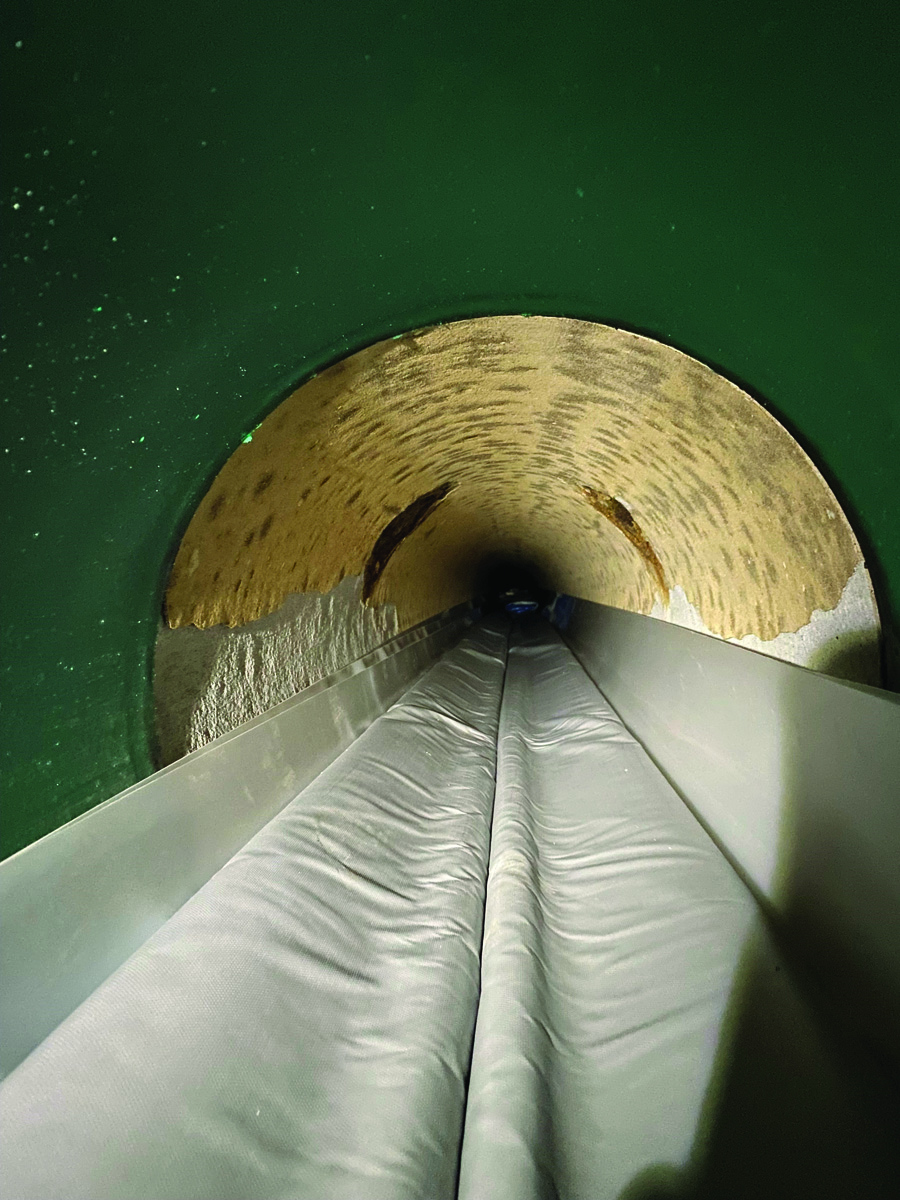
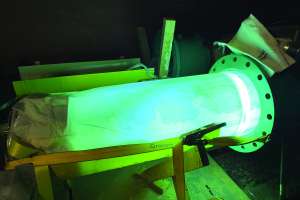
In 2023, after several years of UV curing operations and in response to growing demand for rehabilitation work on large-diameter pipes, Excavation Lafontaine decided to acquire a more powerful unit — the Prokasro POWER unit — in order to expand its operational capacity. At the same time, two additional reaming robots were added to the fleet, allowing the company to effectively meet the sector’s growing needs and maintain its position as a leader in trenchless rehabilitation technologies.
Closing the sale
Today, Excavation Lafontaine has become an acknowledged expert in installing UV-cured pipe liners for a wide range of applications. Even with years of proven experience, the company still faces obstacles in selling these services.
“The main challenges related to UV-cured lining rehabilitation are often similar to those encountered with other rehabilitation methods, particularly a lack of awareness of the technique,” Asselin says. “It frequently happens that projects for which UV-cured lining would be ideal are dismissed by engineering firms due to a lack of information or familiarity with the technology. Conversely, clients sometimes require the use of UV-cured lining on pipes for which this method is simply not applicable, which can lead to technical constraints or unsatisfactory results.”

According to Asselin, these recurring challenges highlight the need for increased awareness and education among clients and engineering firms to determine when and how trenchless rehabilitation methods can be implemented effectively.
“Fortunately, in recent years, Excavation Lafontaine has observed a significant increase in the number of information requests during project planning phases,” he says. “This allows the company to advise clients on the most appropriate methods, on the elements to include in tender documents and, above all, on the feasibility of executing UV-cured lining work.
“When an engineering firm or client requests technical information, our team strives not only to respond with accuracy and rigor, but also to support stakeholders in their analysis and project development,” he adds. “For Excavation Lafontaine, the greatest satisfaction comes from the successful completion of a project that has been prepared and planned over several months, or even several years, in collaboration with engineering firms. This proactive approach ensures optimal execution and guarantees work quality.”
Securing talent
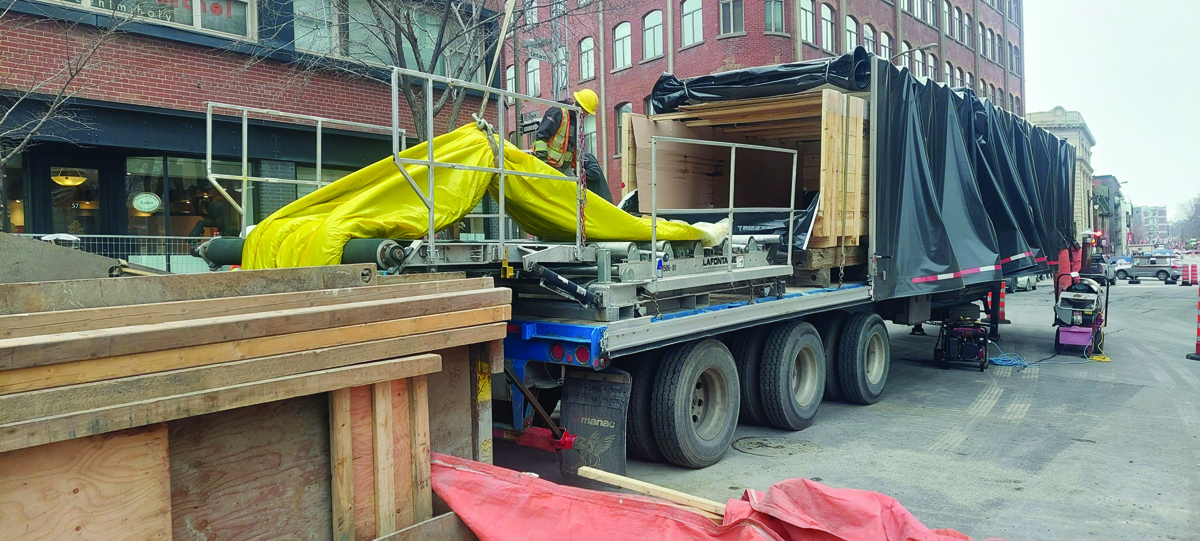
Even with all the positive results, finding skilled personnel to do UV-cured lining is an issue in today’s tight skilled labor market. As a result, one of Excavation Lafontaine’s primary objectives is employee retention.
“By keeping our employees, we reduce the need for recruitment and preserve expertise as well as work quality,” Asselin says. “In terms of training, the preferred method is to integrate new employees into an already experienced team for a defined period. This approach allows new hires to become familiar with the techniques and specificities of our working methods. In addition, specialized training is also provided directly by our suppliers, both for liner installers and reaming robot operators, ensuring full mastery of trenchless rehabilitation equipment and processes.”
Quality over quantity
Looking into the future, Asselin says Excavation Lafontaine is not necessarily seeking to grow in size or workforce, but rather to grow in expertise and quality.
“By ‘growth,’ the company means increasing its know-how, taking on projects with a high level of complexity and strengthening its position as a leader in civil engineering and trenchless rehabilitation,” Asselin says. “Our focus is placed primarily on the quality of the work performed rather than on quantity. This approach ensures client satisfaction, operational safety and the maintenance of high standards in all aspects of our projects.”
Continue reading for free