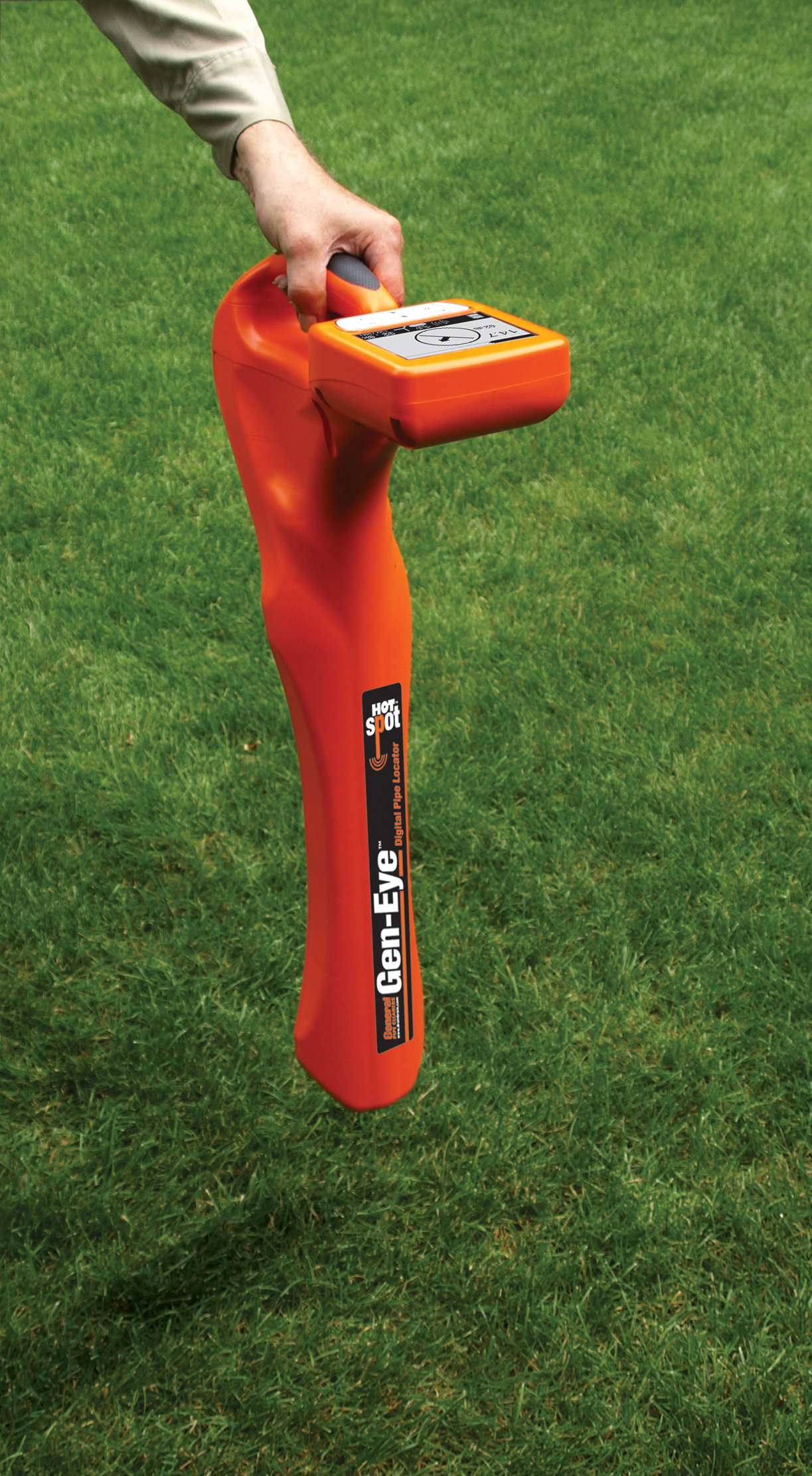
Camera and pipe locating can be very intimidating. However, with the right equipment and a bit of practice, you’ll find that it can be easy. Here are step-by-step basics to help you develop your locating techniques.
1. Turn on the transmitter. OK, this seems pretty obvious but you’d be amazed at how many people get frustrated when they’ve forgotten to turn on the transmitter.
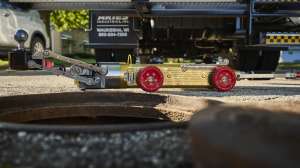
The transmitter, or sonde, is usually located in the flexible spring behind the camera head. Some systems activate the transmitter when the unit is powered up. Others require you to add a battery or turn on the transmitter before you start to locate.
2. Turn on the locator. Make sure the batteries are strong. Weak batteries will severely hinder the locator’s performance. For instance, if you get a good signal from the camera when it’s above ground, but little or no signal when it’s in the pipe, that’s a good indication that it’s time to put in fresh batteries.
Some digital locators have an automatic shut-off feature to save battery life. If the locator sits unused for more than five minutes, it will shut itself off.
3. Select camera/sonde mode. More advanced locators can be used to find more than just inspection cameras. They can look for buried power lines before you dig or trace gas and utility lines with an external transmitter. Be sure camera/sonde mode is selected before you proceed.
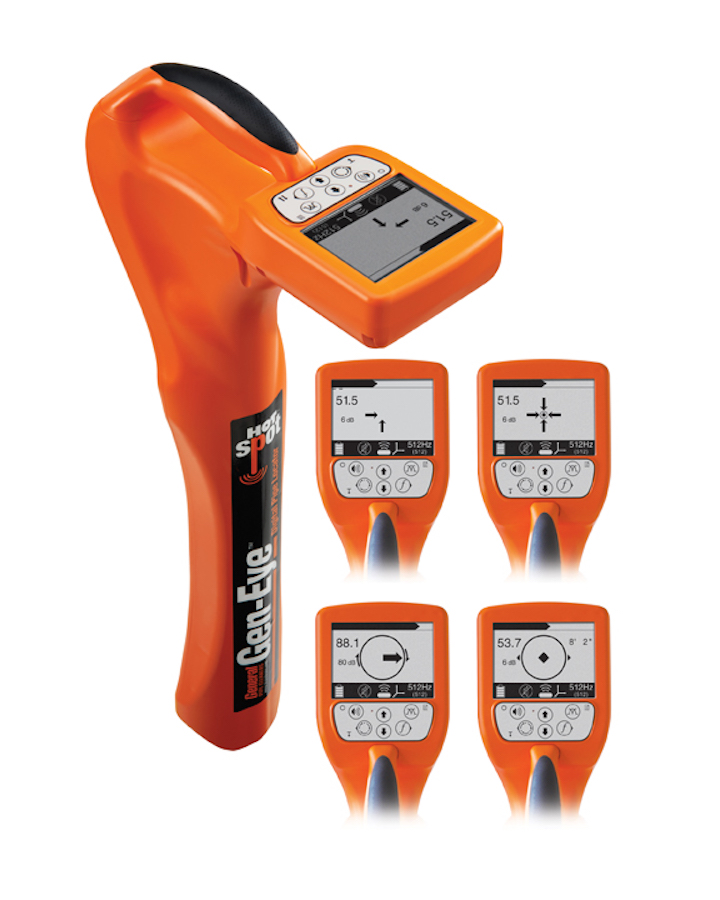
4. Select the total field antenna. This feature is not available on every locator. The total field antenna gives you icons on the screen, like arrows, that lead you right to your target. If you don’t have this feature on your locator, use Twin Peak mode. It’s accurate, but more difficult to use.
5. Select the proper frequency setting. Most camera transmitters operate at 512 Hz. More advanced locators can be switched to multiple frequencies to locate other objects.
For instance, if you want to look for buried active power lines before you dig, you can switch the locator to look for the 60 Hz signal radiating from the power line.
If you need to locate buried gas, phone or cable TV lines, you can switch the locator to receive 1, 8, 33 or 65 KHz and, using a separate transmitter of the same frequency, locate these lines using the tracer wire buried with them.
You can also locate metal drainpipe with this system, but using the camera locator is much easier. You can locate cast iron pipe to depths of 10 feet, or to depths of 20 feet in plastic or clay pipe. Metal pipe blocks part of the signal radiating from the camera.
6. Start slow. Push the camera 10 to 15 feet into the line. It’s tempting to start looking for the camera as soon as you’ve found the problem area in the pipe. It’s much easier to locate the camera in a 20-foot range. Pull the camera back to within 20 feet of the drain opening. Then start the locating process.
7. Stay close. Stand near the drain opening and hold the locator at a 45-degree angle. Rotate in a circle, listening to the strength indicator tone. Note the direction of the strongest signal and walk in that direction. Hold the locator perpendicular to the ground.
8. Reduce sensitivity. If the indicator reaches 100%, press the down arrow to reduce the gain, or sensitivity, until the indicator is about 50%. Repeat as you move close to your target.
9. Which direction? Newer locators have arrows on the locator display screen that will point you to the exact location of the camera. Line direction arrows indicate which way to rotate the locator so that you are in line with the lay of the pipe.
10. Depth indicator. Now that you’ve found the stoppage, note how deep it is so you know whether you need a backhoe or a shovel. More advanced locators automatically indicate depth when you are directly over the camera. Other digital locators require you to press a button. Nondigital (analog) locators require triangulation to find camera depth.
As with other technological advancements, the increased technology in today’s digital locators make the entire process of camera and pipe locating a lot easier and quicker, and provide more confidence to users.
Still, when you first get your locator, don’t immediately run out and use it on a job. It’s a good idea to practice first on several different types of lines, indoor and out, in plastic and cast iron pipe. Soon you’ll wonder how you survived without your locator and why you ever thought locating was difficult.
For more information, or to ask a question, visit www.askthedrainbrains.com or email info@drainbrain.com.