When sewer lines become blocked, the trouble often begins with tree roots. Blockages can also occur due to accumulated hard mineral deposits, grease, silt, or debris.
Although the skillful use of high-powered nozzles with forward-penetrating jets can sometimes dislodge partial obstructions, resolving the worst cases requires the use of special heavy-duty chain cutter nozzles that can remove even a “wall of roots.”
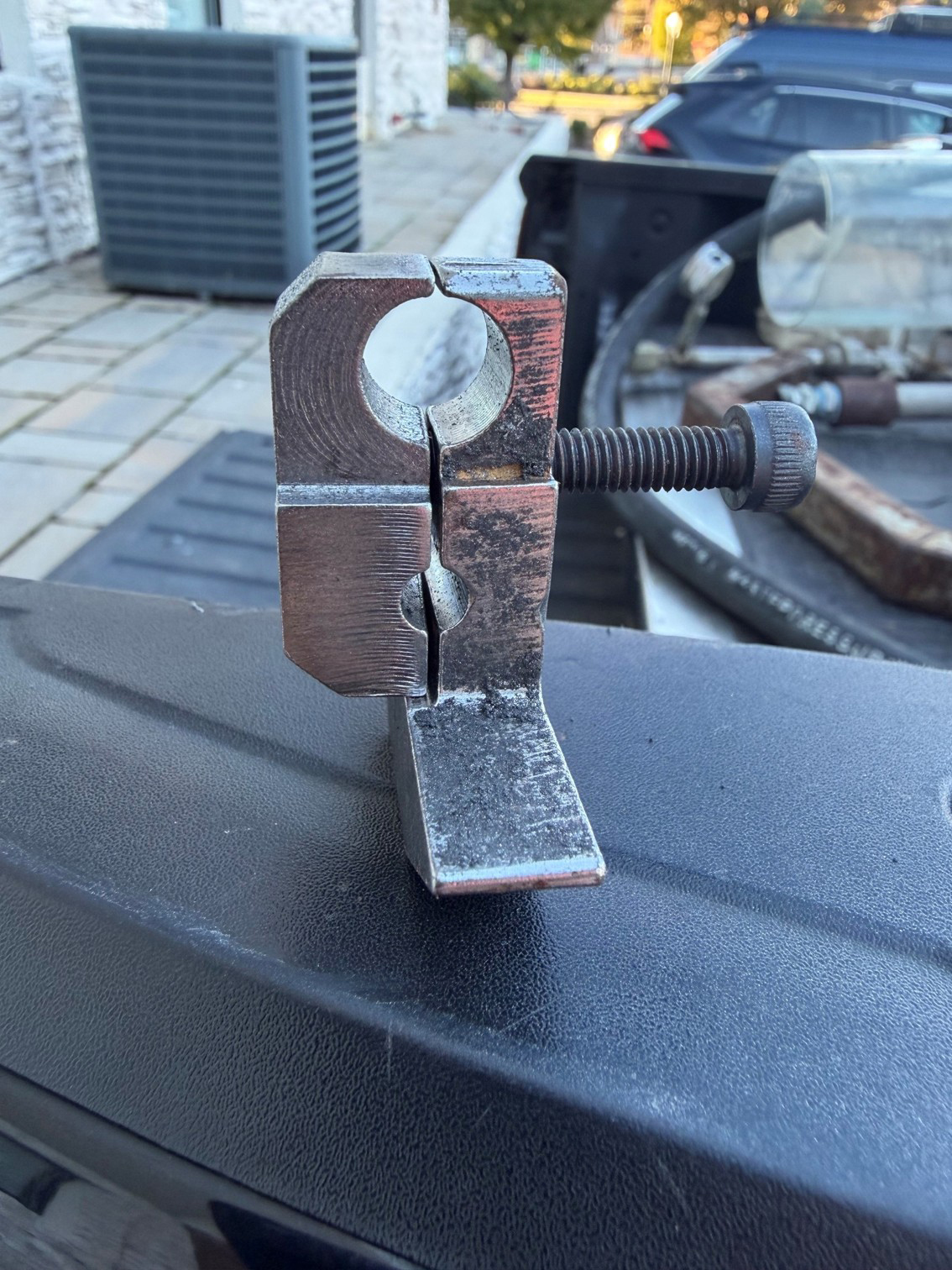
When even more aggressive tactics are necessary, contractors can add cutter blocks to the chain. These hard-metal attachments are designed to take the abuse that would otherwise fall on the chain while chipping away at the toughest material. They can be attached when needed for the most demanding applications to remove mineral deposits, tuberculation, asphalt, concrete, and other buildup from inside the pipe.
According to Dan Story of KEG Technologies, a Spartanburg, South Carolina-based manufacturer of sewer cleaning products, adding the blocks provides an option for harder deposits while staying with the same chain cutter, rather than switching to a completely different tool.
“When you’re out in the field and you run into a tougher job than you planned for, you can put the blocks on the chain, you take care of what is in that line, and you keep going,” Story says.
For the toughest blockages, chain cutter nozzles utilize high-efficiency water pressure to generate the torque needed to cut through thick root masses. When high-pressure water enters the chain cutter nozzle chamber, it drives the cutting chains to rotate at high velocity, generating sufficient torque to reduce the risk of stalling or seizing. For example, the SuperNova 4000 Chain Cutter from KEG Technologies has a high-speed, high-torque, water-driven design that can eliminate heavy root blockages as well as scale, rust, mineral deposits, hardened grease, and even protruding taps such as concrete and cast iron. Intended for use in pipe 6 to 16 inches, the cutter can be adapted for use with up to 48-inch pipe and is compatible with all materials (PVC, clay, iron, concrete).
For even tougher challenges, KEG has offered cutter blocks for its chain cutters. However, given the force and impact the blocks absorb in hardened material, the company determined that a redesign could significantly extend their service life.
“Cutter blocks can wear out quickly or work loose from the chain in tough pipe in really tough applications, so the new style cutter blocks are built to lock onto the chain at three points and are made of harder material,” Story says.
Made from AR400 steel, the blocks now come in two pieces per block and attach using the chain manufacturer’s own master links (the removable links used to join the ends of a length of roller chain). As a result, the blocks remain secured and effective despite the punishment of cutting through hardened material. The design was Story’s idea, and it went through several prototypes before he was satisfied.
“Now you have three points of contact pulling it all together. So, you don’t lose the block, it just keeps going,” Story says. “[Contractors] are amazed at how well it’s allowing them to open up the pipes and take the abuse.”
Thorough cleaning can be important in any pipe, but particularly before relining, since a liner installed over roots, hardened mineral scale, grease buildup, silt, or debris cannot fully contact the host pipe and may not properly bond or cure.
Contractors in the field are reporting service life from a set of the new blocks that they had not seen before. One large lining company, which recently finished a run of 36-inch pipe and is now working in 24-inch pipe, purchased 40 blocks.
“In the 36-inch pipe, they are getting about 400 feet out of using one set of blocks, and it’s not that they’re wearing them out completely,” Story says.
Having never achieved that much footage before, the crew was surprised they weren’t wearing out and changed out the blocks just to be on the safe side.
In Florida, another contractor working in 8-inch pipe was able to cut the entire pipe in one pass, something the crew had never been able to do. The crew ran the same blocks for four days before deciding to replace them.
According to Story, KEG shipped 50 units over two weeks, with orders going as far as Germany and Malaysia.
The new style cutter blocks are offered with multiple KEG chain cutter models and, with the cutter appropriately configured, can be used in pipe from 6 inches all the way up through 48 inches and even larger.
The blocks are in stock in the U.S. and shipping out of the warehouse every day, and KEG can send customers step-by-step instructions on how to assemble them on the chain.
As with any chain cutter, Story says that operators must first set up cutters correctly and follow the manufacturer’s guidelines. In general, he advises, it is best to set up the cutter chain to be about an inch smaller than the pipe it will cut.
As for operating a chain cutter fitted with the blocks, he says, “Let the tool find its way down. You will know when it’s in contact with roots. You can feel it. You can smell it. You can hear the change in the way that the tool works. Just keep feeding it in slow and steady until it gets through the problem.”
Story sees a clear place for the new blocks in a contractor’s toolbox.
“When you are in a tough spot and you have to get [hardened material] out of a line and you need it done right away, these blocks are the way to go,” Story says.
For more information, visit kegnozzles.com.
Continue reading for free