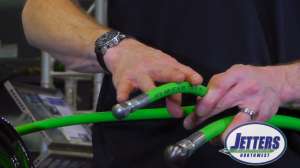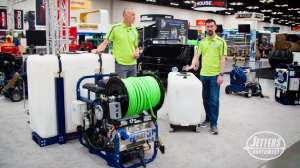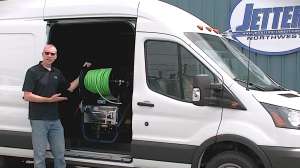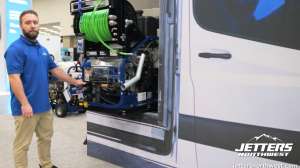

The nozzle is the most impactful component on a hydro-jetter. A jetter without a nozzle would be like a great service van with no wheels — without a nozzle, the jetter’s gpm and psi power can’t even approach the problem in the pipe, much less clear it.
Moreover, the reality is that the nozzle has total control of the jetter’s cleaning power capability. How so? Four major nozzle factors can make or break your jetter’s cleaning power: nozzle design, nozzle calibration, nozzle maintenance, and nozzle wear and tear.
Nozzle design and types
The jetting nozzle’s spray pattern is what directs the water from the jetter toward the blockage and/or buildup to be cleared, which raises some application questions: Should the nozzle have a wide spray pattern to scour the pipe walls or a narrow pattern to impact blockages? Should it spray fixed streams of water, or should the streams be rotating? How much water should it spray forward vs. how much should it spray backward to thrust itself up the pipeline?
There are many different types of blockages and buildup in drain and sewer lines; thus there are a great variety of nozzle types and designs engineered to tackle the various cleaning tasks to be encountered. What’s more is there are other pipeline variables such as size, length, grade, number of turns, material, condition, jetting access, etc. Simply put, proper nozzle application means using the right tool for the job — there is no “one size fits all” nozzle to handle every type of jetting job at peak efficiency. You don’t need to own every nozzle for every possible scenario, but it is wise to have the nozzle types designed to go after the cleaning problems that you know you’ll encounter, making those jobs easier, more productive — and more profitable.
Nozzle calibration
To maximize a jetter’s cleaning efficiency, its nozzle’s orifices (spray holes) must be drilled/bored to match the jetter’s exact gallons per minute and pressure specifications. Be aware: just because a nozzle has the right thread size to fit on the jetter’s hose-end doesn’t mean it is a match — if the nozzle’s orifice sizes haven’t been calibrated to provide the correct release of water flow (gpm) and correct pressure buildup (psi), then the jetter will be like a runner trying to race in shoes that don’t fit. Yes, the jetter still runs, but its performance will be significantly slowed down, losing effectiveness and competitiveness. Bottom line: Make sure that the nozzles you use have been calibrated to match your jetter’s specs for gpm, psi, hose diameter, and hose length.
3 important considerations for nozzle maintenance
Clear plugged-up orifices immediately: The nozzle’s orifice holes will occasionally get plugged up, which causes an immediate loss of performance. Think about it: If a nozzle has five orifices and one gets plugged then 20% of the potential cleaning power has been nullified. If the nozzle only has three jets then up to one-third of the jetter’s cleaning power is lost. It’s like an engine that is not running on all cylinders; it still runs but it’s significantly weaker and less efficient. An inexpensive orifice-cleaning tool is a must-have for the jetting pro to occasionally clear a plugged-up nozzle orifice. Do a quick inspection of each orifice and clear them as needed, before and after jetting.
Prevent surface rust and hard-water buildup to nozzle orifices: All nozzle orifices should be sprayed with WD-40 or similar type of lubricant to help prevent surface rust, hard-water buildup, and/or ice — at least on a weekly basis, if not every night. Even the high-end ceramic and carbide orifices of a “maintenance-free” nozzle can receive crippling buildup, so a quick shot of spray-lube to the orifices can be cheap insurance.
Does the nozzle require lubrication? Most nozzles that have rotating water jets will require some sort of lubrication. Many rotators just need their rotating parts sprayed with a light lube after each use (e.g., WD-40), but some premium nozzle types require an injection of a specific lube oil. A seized-up nozzle can be useless, so make sure you know and follow the correct lubrication procedures for all your nozzles, especially premium rotating nozzles designed for clearing tree-roots, grease, scale, etc.
Nozzle wear and tear
A worn-out nozzle will adversely affect the jetter’s sewer and drain cleaning performance. Going back to the vehicle comparison, a worn-out nozzle is like bald tires on your vehicle, causing it to slow down or even spin its wheels when the going gets rough. Why? Because nozzle orifices are subject to high-velocity erosion. Not only does water erosion cause orifices to gradually get larger — reducing your jetter’s pressure — but eroded orifices also cause the water jets to “sprawl” or “mist” rather than producing coherent and impactful streams of water. This huge loss of cleaning efficiency can be a blind problem because we typically can’t clearly see the water jets in action inside the pipe. However, if you do see grooves forming in the nozzle body just beyond an orifice then that orifice is worn out — its water jet is definitely sprawling, thus physically impacting the nozzle body rather than rifling straight past the nozzle body to fully impact the blockage or buildup.
Just like a clenched fist can hit harder than an open hand, the concentrated water jet from the uneroded orifices of a newer nozzle — or better yet a nozzle with orifice jets machined from more durable ceramic or carbide — will hit blockages and buildup harder and clear them faster, so throw away and replace worn-out nozzles and/or orifices.

That all might sound complicated, so here’s a simple nozzle-effectiveness plan:
- Learn nozzle application to choose the right nozzle for each situation that you expect to encounter. Jetters typically include basic nozzles for blasting out simple soft clogs and debris. Consider investing in specialty nozzles designed specifically for premium jobs like root cutting, grease removal, etc.
- Before ordering new nozzles, know your jetter’s gpm and psi specs as well as its hose size (diameter and length), then make sure your vendor is capable of calibrating nozzle(s) to match.
- Take the time to maintain each nozzle. Lubricate them as needed.
- Jetting with worn-out orifices is like trying to cut with a dull knife. Removable orifices in premium cutting nozzles should be replaced yearly if the nozzle is used on a regular basis. Basic drilled nozzles should be replaced often; if they look worn out, they probably are.
Nozzle efficiency is clearly very important to the jetting professional. Whether you’re running a van-mounted jetter, a trailer, a portable cart, or even a small hand-carry unit, if that jetter does not clear the line in a timely and competitive manner you’ll lose work hours, possibly fail to get the job done, and maybe even lose the customer. Having the right selection of nozzles matched to your specific jetter can make all the difference to your bottom line — and your sanity.
Visit youtube.com/@JETTERSnorthwest for lots of nozzle demos, tips and training. You can also ask questions in the video comments, or feel free to give Jetters Northwest a call at 877-901-1936. Also check out shop.jettersnorthwest.com for specific nozzles, hoses, jetting accessories, and more information.