
If you’re in the market for a hydroexcavator, knowing exactly what to look for can save you time, money and frustration down the line.
Vacuum trucks are powerful tools, capable of tackling everything from potholing and trenching to sludge removal and industrial cleanup. But not all hydroexcavators are built the same, and neither are the jobs they’re expected to perform. Selecting the right one depends on your specific needs, materials and job site conditions.
Here’s a breakdown of what to consider when selecting a hydroexcavator.
Understand the material you’ll be handling
Before you even look at horsepower or tank size, think about the materials you’ll be removing. Hydroexcavators and vacuum trucks can handle a wide range of materials: liquids, slurries, oils, sludge, dry powders and even combustible dusts. But each of these materials may require a different truck setup.
For example, flammable or low-flashpoint substances call for vacuum trucks equipped with safety systems designed for hydrocarbon handling. If your jobs involve alternating between wet and dry materials, a combination truck might be the right fit. And if you’re working near railways, consider a rail-ready truck equipped to remove and replace ballast or clean up environmental spills along tracks.
Matching the machine to the material is critical. If the vacuum system isn’t optimized for the type of debris you’re collecting, you risk slower operations, clogged equipment or worse — safety hazards.
Gauge the volume of work
Once you’ve narrowed down the type of materials you’ll be working with, the next step is estimating how much debris your truck will need to hold. Hydroexcavator tanks vary in size, typically ranging from 12 to 21 cubic yards. While the industry standard sits around 18 cubic yards, that might not be enough — or it might be too much — depending on your operation.
The right tank size minimizes the need for disposal trips. For large jobs or remote sites, a bigger tank reduces downtime. But for tight, urban environments, a smaller, more maneuverable truck might be a better match. Carefully calculate your average load volume and balance it against site accessibility and travel times to dump stations.
Consider where the truck will be used
Even the best-equipped hydroexcavator won’t be effective if it can’t access your job site. Site conditions can drastically affect what type of truck you should buy. Will the truck need to operate on roads, rails or both? Will it be used in a chemical plant or around sensitive infrastructure? Do you need a truck with advanced digging capabilities?
If you’re working on fiber optic installations or other shallow trenching jobs, microtrenching trucks designed for fast, clean cuts can boost daily output. For more rugged work, such as industrial cleanup or remote field jobs, look for trucks that offer rear-mounted controls and boom systems for greater operator control and reach.
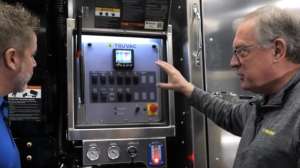
Also consider how much automation and control flexibility you need. Some hydroexcavators offer fully enclosed operator stations, wireless controls and safety interlocks to reduce risk and improve efficiency.
Final thoughts
Buying a hydroexcavator is more than just picking a machine with a tank and a vacuum. It’s about understanding your needs and how different features — from tank capacity and vacuum type to mobility and control systems — align with those needs.
Take time to walk through your most common job types, volumes and locations. A thoughtful approach not only ensures better performance on the job, but also extends the life of your equipment and protects your investment. Looking for a hydroexcavator is a process that pays off when done right.
Continue reading for free