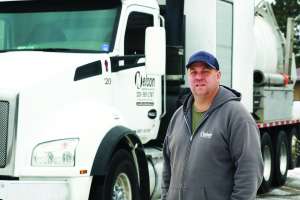
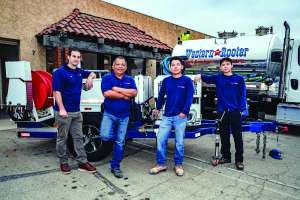
“We just tried to meet customers’ needs and grew from there,” says Nelson, 40, who bought the company from his father in 2011. “Word-of-mouth referrals and doing quality work have been huge for us. We seem to get a job in an area where we don’t work much, and all of a sudden boom, other people start calling us. We never want to tell customers no.”
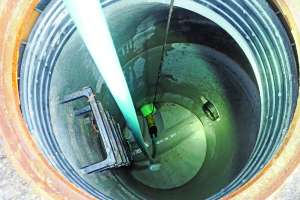
Today, about 75% of the company’s nonseptic and nonrestroom revenue comes from sewer cleaning, primarily for small municipalities that either can’t afford expensive sewer cleaning equipment or don’t have enough staff to handle the task. Sewer inspections contribute the remaining 25% of sales.
“It’s not all just sewer jetting, though,” Nelson says. “We also clean large municipal and industrial tanks, do daylighting for utilities and clean lift stations for municipalities. Sometimes we’re doing up to five jobs per day per truck and working all over the state.”
Today, the sewer-related services contribute about 40% of the company’s total revenue. By comparison, restroom rentals generated about 80% of the company’s revenue as recently as 2017, Nelson notes.
Filling Underserved Niches
As an example of Nelson’s willingness to try new things to fulfill customers’ needs, consider the company’s entry into sewer cleaning around 2017. Initially, it didn’t go well.
“We were breaking our backs trying to clean storm sewer sumps for a local city with septic trucks,” recalls Nelson. “Then we learned that a local municipality was selling its hydroexcavation/vacuum truck, so we bought it. My reasoning was that no one else owned a vacuum truck at the time in the area around St. Cloud (the biggest city near Rice). So I knew there was a need.”
When the company bought the truck, Nelson asked the municipality if it would sign a three-year contract for cleaning its sewers, which it did. That gave the company a foothold in the industry, he says.
Nonetheless, Nelson describes the first couple years as “very nerve-racking,” especially since no one had much experience cleaning sewers. The resulting learning curve was stressful, but learning by doing quickly paid dividends.
“Our first job was cleaning 10,000 or 12,000 feet of sewer lines in a town about two hours away,” Nelson says. “It took us days longer than it should have, but we got it done and got a lot of experience, too. After we got a few jobs under our belt, people saw we were ready to take on more.”
The company’s reputation spread, aided largely by word-of-mouth referrals as well as the hiring of a sales representative. Within about two years, the company bought another vacuum truck. About two years later, Nelson invested in yet another one.
More Growth, More Trucks
Fueled by even further growth, the business bought another combination vacuum truck in 2023 and one more in 2024.
“In the past three years, things have been growing like crazy,” Nelson says. “We’re a lot more knowledgeable now and we can take on more complicated projects — and can take on more projects in general. We also do a lot of temporary sewer bypasses, something that not many other companies are capable of doing.”
The company’s diverse services also provide a benefit here as Nelson uses septic trucks to haul waste vacuumed from sewers during bypasses. The company often puts Nelson Sanitation restrooms on job sites as well to market that service, he says.
“We also advertise our hydroexcavating services by putting stickers on the restrooms at our many job sites, including projects like pipeline locating and sewer cleaning,” Nelson notes. “So all the services work together, in a sense.”
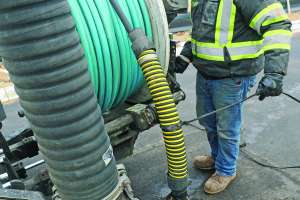
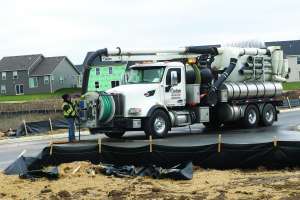
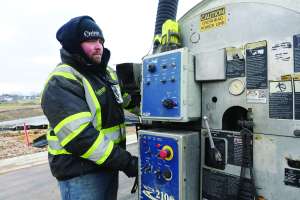
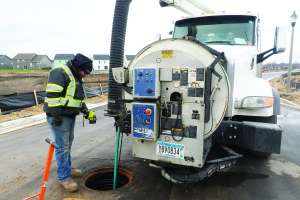
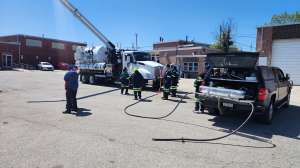
The company currently owns five combination sewer vacuum trucks: four Vactor 2100s and one RamVac (a brand manufactured by Sewer Equipment), built out on Freightliner, Sterling, Peterbilt and Kenworth chassis. The Vactors feature 12-cubic-yard debris tanks, 1,200-gallon water tanks, blowers from Roots and Vactor water pumps (2,500 psi at up to 80 gpm). The RamVac truck features a 15-cubic-yard debris tank, a 1,300-gallon water tank, a water pump (2,500 psi at 10 gpm) and a Roots blower.
Another Knock on the Door
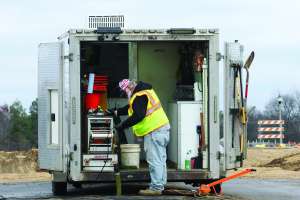
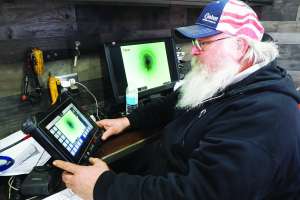
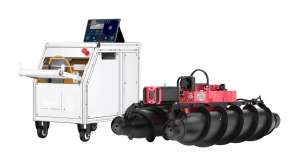
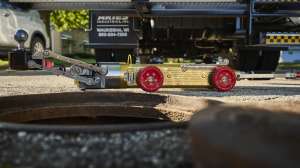
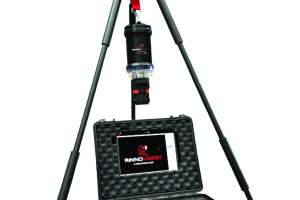
As the sewer cleaning end of the business grew, customers started asking Nelson if he could also provide pipeline inspection services. About a year after the company bought its first vacuum truck, he obliged by investing in a Rovver X inspection camera system from Envirosight. The camera is transported in an enclosed trailer made by Cargo Mate.
Spurred by customer demand, the company invested in a camera truck in 2021: a 2010 Ford E-450 cutaway van outfitted by Aries Industries with a Badger mainline crawler. It features a WiperCam pan-and-tilt camera and a lateral-launch system.
“After we got into jetting and televising, things just kept growing and growing and growing,” Nelson says. “We kept reaching out to municipalities and underground contractors to see if they needed any jetting or inspection services and business kept expanding geographically.”
In spring 2024, the company invested in a Mobile Pathfinder System, made by Aries and housed in a 2017 Ford E-450. It features an Illumi-Zoom camera and lateral-launch capability. The company also owns a push camera from Envirosight for smaller jobs.
A Demanding Growth Spurt
How did Nelson pay for all of the company’s vacuum and camera trucks? He financed some and paid cash for others.
“It created a lot of stress,” he says. “I wasn’t always confident it would work out, but we just went in and kept getting it done. We’ve grown every year by being aggressive and working hard to earn repeat business. It’s been both fortunate and exciting, as well as a headache, too.”
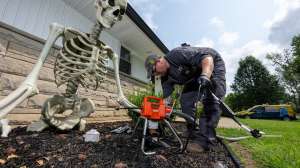
Along the way, the company also bought an EMSP-6 easement jetting machine from SRECO-FLEXIBLE, used to clean remote, hard-to-access sewer lines. For jetting, Nelson prefers Enz nozzles: the Bulldog, the Bulldozer and Golden Jet models.
In addition, the company owns more than 3,000 restrooms, mostly from Satellite Industries along with units from PolyJohn and T.S.F. Company; restroom trailers from Satellite; four vacuum trucks for pumping out septic tanks; and a 2002 Ford F-550 water truck that carries a 1,200-gallon tank.
Success Story
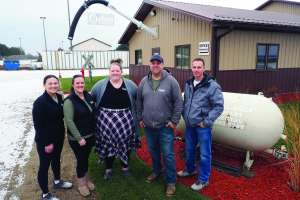
Nelson never intended to buy the family business, which started out as a septic pumping business in 1979 and added portable restroom rentals in 1994. He started working for his father in 2000, when he was 16 years old, then bought the business in 2011, believing it had great potential that couldn’t be realized if it kept operating only as a part-time endeavor. (His father also worked full time for a local railroad.)
“I was in the septic and restroom industries while growing up, so that was all I knew,” Nelson says, explaining why he bought the business. “I saw the potential for growth.”
What was his motivation to success? “It was do or die — I had to make it work,” he says.
Keys to the company’s growth include Nelson’s commonsense marketing instincts; an emphasis on customer service; a be-first-to-market mentality with new technology; the ability to trust employees and delegate responsibilities; and a strong work ethic.
“We also have great customers and awesome employees,” Nelson adds. “All of our employees have a really strong work ethic and that helps substantially.”
For marketing, Nelson takes a practical, boots-on-the-ground approach. When he first started out, for instance, he stopped at every construction site he’d drive past and ask someone if they needed restrooms.
“I also had magnetic business cards made that I’d stick on the doors of job shacks (on construction sites) if no one was there when I called,” he says. “It was total boot-leather marketing. I had no experience at all in marketing, but we went from 30 restrooms to 300 in six or seven years, so I must’ve been doing something right. Plus, at the time, no one else in our industry was prospecting for customers like that, so I was really rocking it — probably closed on 95% of my sales calls.”
Today, staff cross-markets the company’s services whenever possible. When potential customers call to rent restrooms, for example, they’re also informed that the business does hydroexcavation and sewer cleaning work. In the same vein, hydroexcavation projects can lead to restroom rentals, Nelson says.
Eager for Further Growth
Looking back, Nelson is gratified by how well things turned out, especially considering he never intended to run his father’s business at first.
“If I didn’t enjoy doing it, I wouldn’t do it anymore,” Nelson says. “It can be frustrating at times, but I still enjoy the challenges every day.”
As for the future, is Nelson ready to tap the brakes a bit after enjoying significant annual sales growth year after year? Not really.
“I’m ready to hit the gas a little bit,” he says. “I’m not looking to diversify further. I just want to focus more on becoming better overall at what we do and grow from doing that. I want to get better organized and look at how we can improve and streamline things internally. Our overall goal is to grow.
“But I’m not expecting to have 500 employees in 20 years,” he adds. “I don’t want to grow so large that we lose track of our values. We want managed and controlled growth that allows us to keep supplying customers with good service, good equipment and good quality control.”