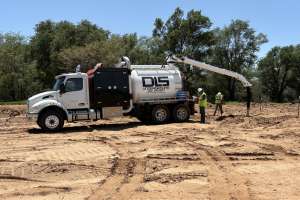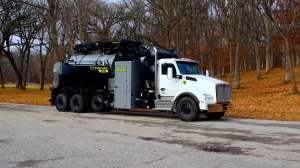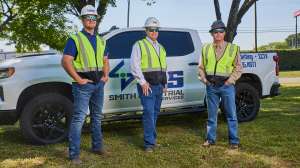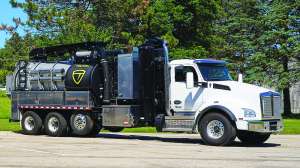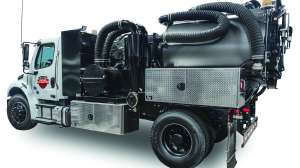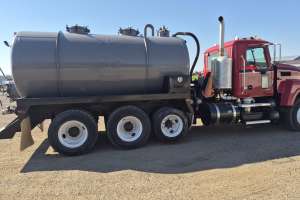

Instead of relying on destructive mechanical tools or backhoes, dedicated hydrovac trucks have become a major part of the operation at Smith Industrial Services.
Russ Ackerman, who heads the company’s municipal services and hydroexcavation department, recalls the earliest days of soft-dig applications when they were far less familiar across the Southeast and much of Smith Industrial’s service area.
As far back as the early- and mid-2010s, crews were learning on live jobs. At first, they approached hydroexcavation much the way many utilities and contractors did — another way to dig.
“We didn’t know anything about hydroexcavating,” Ackerman says. “The first few years we did it with a combo truck and a Soil Surgeon. You’d put that on, plug your 1-inch hose on it, and we would go to digging.”
Careful observation and field experience taught the company what worked and what did not. Crews learned early on that saturating soil too heavily could create cave-ins and instability. They adjusted around soil conditions, utility congestion and safer digging practices: breaking up the soil, removing it quickly and keeping the excavation stable.
That early learning curve eventually led to a fleet of dedicated hydrovacs and a deeper understanding of how to apply them. The company advanced through patience, attention to detail, seeing how other crews approached the work and engaging with peers and partners across the industry.
Today, the company does not keep that knowledge to itself or limit training to internal crews. Ackerman points to people like Georgia-based sales manager Tyler Bruce, who spends time creating opportunities for shared learning and conversation about where a dedicated hydrovac truck fits and what it can do.
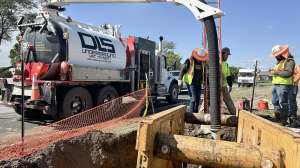
In his role, Bruce goes beyond highlighting equipment specs, talking through fleet capabilities and drawing attention to damage prevention implications. He has found that letting people see soft-dig technologies up close helps clarify both their limitations and their advantages. Watching a hydroexcavator daylight a ribbon trench, safely expose a utility or open around buried infrastructure often communicates more than a verbal explanation alone.
This roadshow-style approach includes earnest conversations, real-time questions and answers, and tailored demonstrations of equipment and applications at customer sites.
“Just getting out, seeing the people, treating them right, creating a relationship,” Bruce says. “Treat every job like it’s your own.”
“There are so many things in the ground from power, water, gas,” Ackerman adds. “They don’t really get to see this technology coming around. Letting people see what it is and doing some demos really changes things.”
Read more about Smith Industrial Services in the November 2026 issue of Cleaner magazine.
Continue reading for free