The company generated about $10 million in sales in 2023 and boasts a fleet of combination sewer trucks and camera trucks worth millions of dollars.
“I think we’ve done pretty good,” Denny says. “Mark and I were blessed with a strong work ethic and a firm belief in being honest about everything we do. And those two things have done a lot for us.”
How Twin D morphed from a small, two-man operation that relied on a used 1974 jetting truck into one of the largest companies of its kind in Utah testifies to more than just the power of hard work. It also underscores the benefits of investing in advanced and productivity-enhancing equipment, following a strategic growth plan that capitalized on an underserved market niche, and developing a company culture that emphasizes customer service.
“Our core values are excellence, empathy, character and ‘earn it,’” Denny says. “That means we do top-shelf work, we value customers as human beings and don’t view them as dollar signs, and we operate with integrity. Trust is hard to earn, but very easy to lose.
“As for ‘earn it,’ it means we work hard, stay humble and be grateful for the opportunities to work for people.”
Denny says naysayers also motivated him and his brother.
“When we first started out, two people in the industry said we’d be out of business in six months,” he recalls. “It was very motivational — Mark and I used to joke about it all the time. If you tell me I can’t do something, I’m going to work hard to prove you wrong.”
HUMBLE BEGINNINGS
The seeds for Twin D were planted around 1989 when a friend of Denny’s, who inspected pipelines for municipalities, asked Denny if he was interested in buying pipeline cleaning equipment to clean lines prior to inspections.
A former auto mechanic, Denny was already familiar with the wastewater industry after working for about four years as an equipment maintenance manager for a local wastewater treatment facility. The job duties included occasionally cleaning sewer lines with a Vactor combination vacuum truck, he says.
While considering the offer, Mark, who was working in human resources for the state of Utah, asked if he could join as a business partner.
“We’re very close, so I said yes,” Denny says.
They bought a used 1974 jetting truck for $4,500 from a local municipality and went to work.
“We would jet lines, pull debris back to the manhole, climb down and put the debris in buckets and then hoist them up and out of the manhole,” Denny explains. “It was very primitive.”
LET THE GROWTH BEGIN
But the duo eventually realized they couldn’t make a go of it by relying only on the business of their friend’s pipeline inspection company. So Denny sent out surveys to several hundred cities and municipal sewer districts in Utah asking about interest in hiring them to do scheduled sewer maintenance.
“We got pretty good results from that survey,” he says. “At the time, it was unheard of for municipalities to contract out for sewer maintenance.”
The brothers formed Twin D and bought an older, used vacuum truck. About three years later, they bought the company’s first camera truck — a used van outfitted with a CUES pipeline inspection system. They also invested in a Camel combination vacuum truck from Super Products.
“We kept adding services as demand from customers dictated — and driven by the need to make more money,” Denny says.
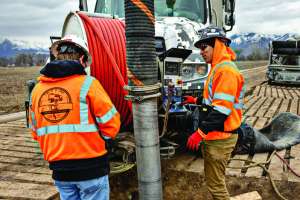
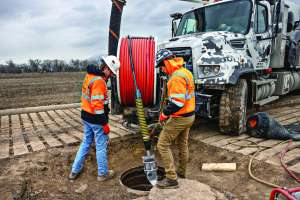
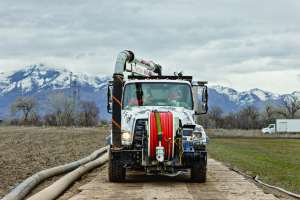
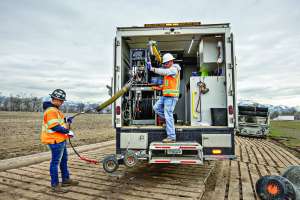
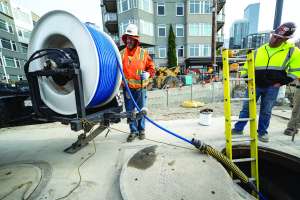
As the business grew, so did its fleet of equipment. Today the company owns three Vactor 2100 Plus combination trucks and six Vactor 2100i units, with a GapVax combo truck on order. Most of the vac trucks have 10-yard debris tanks, water tanks of at least 1,500 gallons, reels with 800 feet of hose, Roots blowers and water pumps that generate up to 80 gpm at 2,500 psi.
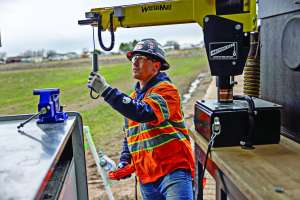
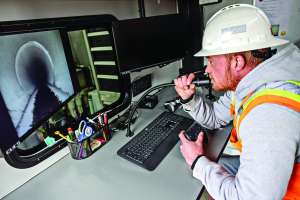
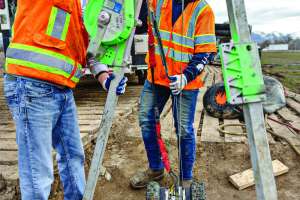
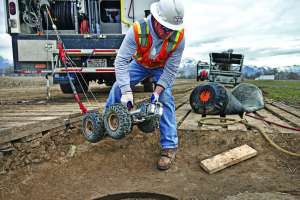
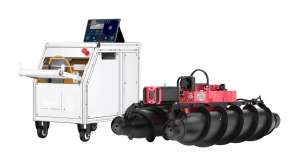
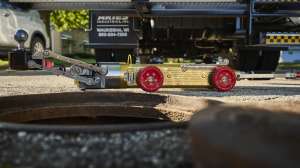
The company also owns six camera trucks, outfitted with CUES cameras carried by either Ultra Shorty tractors (CUES) or Aries Badger tractors. One remaining truck also carries a robotic cutter from Schwalm for reinstating laterals.
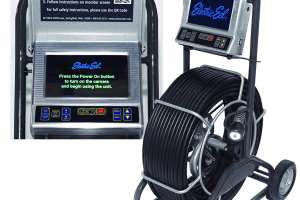
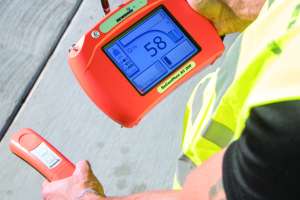
Twin D also relies on pressure testing equipment from Cherne (part of the Oatey family of companies); SL-RAT acoustic testing equipment from InfoSense; a Primeliner trenchless spot repair system from PrimeLine Products, for 6- to 36-inch-diameter pipes; and a U-Vue push camera from UEMSI, used in pipes that are too small to accommodate the CUES cameras.
MUNICIPAL MAINTENANCE
Regularly cleaning and inspecting pipes for about 100 municipal customers generates about 55% of the company’s revenue. On average, Twin D cleans about 4 to 5 million feet of pipe a year and inspects between 3 to 4 million feet of pipe. It also performs acoustic testing on another 7 to 8 million feet of pipe annually.
Obtaining contracts to perform what Denny calls “rotational maintenance plans” for municipal sewer lines has been one of the company’s biggest growth drivers.
“We changed the landscape of this industry in the state of Utah,” Denny says. “Before, the prevailing mindset was emergency response work. But we offered to preventively maintain municipal systems — become a partner with municipalities and offer them a preventive plan to clean and inspect a couple thousand feet of sewer a year. We decided to focus on this niche and be the best we can be at servicing that niche.”
Twin D started out by only cleaning pipelines, while the other company that they agreed to work with inspected the pipes. But the brothers decided in 1994 to also handle the inspection side as well, Denny says.
The company’s first municipal customer was a wastewater utility in Fillmore, Utah. And as a testament to Twin D’s customer service, the utility still is a customer today, Denny notes.
But the company also does pipeline inspection and cleaning for hundreds of developers and contractors, which contributes most of the remaining 45% of the firm’s revenue.
THE BUSINESS OF FAMILY
Mark retired in 2018 and sold his part of the company to Denny. They survived running a family business together for close to three decades by strictly adhering to two basic rules: business should never come before family, and all decisions must be unanimous.
“We always looked at the business as a means to an end, which was supporting our families,” Denny says. “It could never be as important as family. So if family ever got in the way, then the business should go away.”
While plenty of challenges emerged during the many years they ran the company together, Denny says he and his brother had a lot of fun overall, despite occasional differences of opinions.
“We always agreed to go ahead with things only if we had unanimous agreement,” Denny says.
SERVICE EXPANSION
In recent years, Twin D has expanded into some other services, such as lateral reinstatements, acoustic testing, pressure testing and trenchless spot repairs.
“We added services because customers asked us to do this and that,” Denny says.
It also made sense to offer additional services because pipeline inspections often revealed problems that Twin D then would have to subcontract out to other companies equipped to solve the problems.
On the other hand, Denny says one key to the company’s success has been a very conservative approach to adding services. For example, one customer recently asked if Twin D would do manhole rehabilitation, something that will require some careful consideration, Denny says.
“We don’t want to jump right into something and then just stumble along,” he says. “You don’t want to get in over your head and fail.”
Along the way, Twin D has also stopped doing certain jobs, like an annual pit cleaning project at a poultry processing plant in Utah. The company cleaned out what was known as a “blood pit” for nearly a decade before calling it quits because the conditions were so brutal, Denny says.
“I can’t even describe how bad it smelled,” he recalls. “Guys would literally puke while working. We had to buy special boots, protective clothing and breathing apparatus because guys would have to wade into the pit, 3 or 4 feet deep with blood and foam. It was unimaginably bad.”
RETIREMENT BECKONS
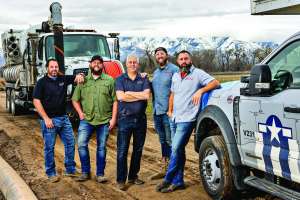
Denny plans to retire later this year in November. After that, a succession plan will kick in, with his four sons — Aaron, age 41; Nate, 40; Stuart, 38; and Brayden, 36 — taking the reins. Future plans may include geographic expansion as well as further service additions, Denny says.
But the bottom line is the sons are free to take the company in whatever direction they want.
“When I’m gone, I’m gone,” Denny says. “They can call me for advice if they want, but I’m not going to keep an office there. I want them to become masters of their own destinies and let them take the company wherever they see fit.”
Is it hard to let go?
“I’ll miss the camaraderie,” Denny says. “But I’m ready to do more things with my wife, Amy. The business doesn’t define me. I take a lot of pride in what we accomplished, but it doesn’t define who I am.”