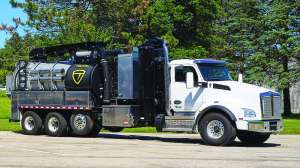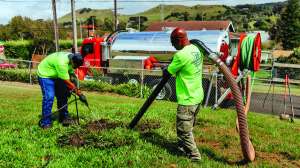

Addressing sewer blockages often demands a combination approach that includes the use of a boom. That means using water jetting to break up the blockage and then vacuum technology to suck up the debris that created the blockage in the first place.
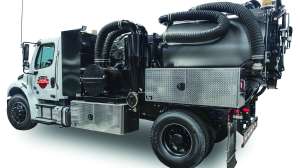
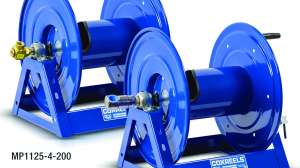
For a combination sewer cleaner truck, this requires the use of a hose reel to manage water jetting and a 6- to 8-inch vacuum hose to enter the sewer to suck up the debris through a boom and into the truck’s debris tank.
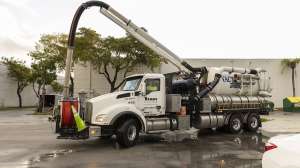
A boom is a mechanized arm that can extend off a sewer cleaner and be easily maneuvered allowing the operator to precisely position the suction hose to reach hard-to-access locations and depths common to underground sewer lines and catch basins.
At Vactor, there are many boom options in a variety of lengths to tackle any sewer maintenance challenge, including fully hydraulic, extendable, telescoping and 360-degree rotation.
But choosing the best boom for a given application or situation isn’t always easy. Here are some tips:
Consider the application. Booms have multiple applications, most commonly sewer maintenance, hydroexcavation and catch basin cleaning. When removing debris and blockages from a sewer line, the boom is crucial for directing the high-pressure water jet while simultaneously vacuuming the loosened debris. Choosing the right boom for the job will increase efficiency and effectiveness. The Vactor 2100i 10-foot telescoping boom, for example, is ideal for sewer cleaning and hydroexcavation, while Vactor’s RDB 1015 is great for catch basin and lift station cleaning.
Know the depth of the site. Booms vary in both their reach from the truck and their depth into the ground. A 5x5 boom may be effective for a shallow site, while a deeper site might require the 15-foot depth.
Consider time constraints. In most cases, it takes several minutes to lift additional tubing off the rack to extend a truck's boom. Vactor's rapid deployment booms, like the RDB 1015 boom, increase operator convenience and reduce set-up and tear-down time. The RDB 1015 telescopes 10 feet out and extends an additional 15 feet down for faster cleaning of catch basins, sewer lines and utility holes without taking the time to manually assemble and disassemble added tubing between locations.
Get to know the location. Booms are designed to work with the existing landscape and infrastructure. In areas with dense vegetation or tree canopies, a longer boom may be needed to reach the worksite without risking worker and truck safety. In more condensed urban areas, a smaller boom like a 5x5 or 7-foot telescope model may be the safest option to minimize disturbance. For example, the Vactor 7-foot hydraulic model features 360-degree rotation, maximizing efficiency on complex sites.
In addition to choosing the right boom for the job, ensure operators are properly trained before beginning operation. Operators control the boom using a remote or joystick from the truck's cab. This allows for precise positioning of the boom while allowing operators to maintain a safe distance.
For more information, visit Vactor.com.
Continue reading for free